
Stop Being Afraid of the Barbell.
Is the Barbell Dangerous?
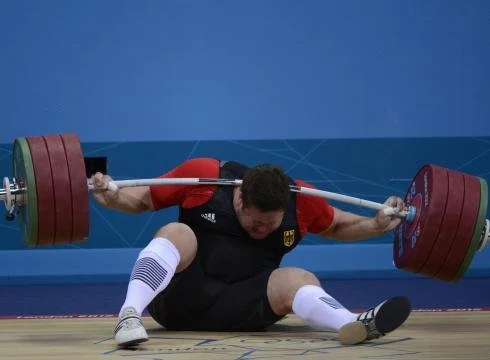
Despite fail videos – and the average joe on the internet saying that “the deadlift is bad for your back” – its actually quite the opposite!!
Utilizing a barbell in your routine (when you’re ready for it), is quite powerful for your body’s core strength AND bone density.
Spinal Loading
Many people are afraid that loading your spine is bad for your body, but this is really just from a misunderstanding of how the body works.
Our spine is designed to take on load. This actually helps to build up our bone density and core strength for functionality.
The less you load it, the weaker it becomes. The weaker you become in your trunk, the more your posture will begin to crumble – along with your risk for injury increasing. The way to decrease this risk is to keep these muscles strong and active.
When to Start Using the Barbell
Obviously, you don’t want to jump right into working with a barbell if you’re just getting started in the gym – and especially if you already experience recurring pain in your daily life.
Before starting with a barbell, you’ll want to be confident in your ability to hande the bare load of the bar (45 lbs) with the proper technique.
Once you’ve got those two things – the strength and technique – you can then begin working with a barbell.
How long this will take depends on the person and their starting point (like posture, technique, their connection to their body, genetics, etc).
should you start with the barbell yet? → A check list
CAN/ DO YOU.....
Perform this exercise with proper technique?
Maintain a neutral spine while performing the exercise?
Breathe and brace properly?
Experience no pain in the shoulders, hips, back, or knees during the exercise?
Perform this exercise with ease, while holding over 45 lbs loaded?
Benefits of the Barbell
One of my favorite benefits of using the barbell in training is how it provides ease in progressive overload.
The barbell can provide a layer of safety/stability during set-up, while also providing the ability to add more weight for better and more optimal progress.
Holding 100 lbs on your back can feel pretty easy with a barbell with proper technique, but holding 100 lbs with dumbbells can become far more challenging and unstable. This is where you’ll be able to make better and faster progress if utilizing a barbell instead of the dumbbells or other free weights.
Barbell & real world transfer
When it comes to functionality, working with a barbell can prepare you for real life experiences too.
Here are some examples of how a barbell can serve someone w/ real life movement transfer:
Barbell conventional deadlifts ⟶ Helping a family member get up from the floor.
Barbell back squats ⟶ Picking someone up on your shoulders at a concert, and being able to set them down again with ease.
Barbell row ⟶ Moving or putting away furniture.
Barbell step-ups ⟶ Being able to handle multi-day hikes/ treks with a heavy backpack.
Barbell floor press ⟶ Being able to push yourself up off the floor.
How to Get Started with the Barbell
If you’re starting with no lifting experience, you’ll want to first get comfortable with the proper technique without a barbell.
First, learn how to perform the standard and main compound movements. This includes variations of the squat, deadlift, chest press, overhead press, hip thrust, and bent over row.
From there, practice techniques like bracing, breathing, and tempo – And then progress slowly with both weight and reps until you’re able to do 3x12 @ 45 lbs (minimum).
Once you’re there, and if you feel comfortable, you can begin to integrate barbell technique work into the beginning of your workouts. If you’re no longer able to hold and progress with your dumbbells, this is also definitely a sign to move to the barbell!!
