
Cardio vs. Strength Training for Fat Loss | Which Is Better? A DEEP-DIVE.
Lifters will tell you resistance training is better for fat loss — and runners will tell you cardio is better. So… what’s the truth? 👀☕️
Today we’re going to dive into what matters for fat loss when it comes to lifting and cardio, and explain the power of each on your fat loss journey.
A Reminder on How Fat Loss Works
Before we get into the convo of cardio vs. lifting, let’s first re-cap on how fat loss works. The only way fat loss can occur is through a caloric deficit — meaning your body needs to utilize more calories than you consume within a day.
It doesn't matter whether you're running 26.2 miles or squatting 300 lbs to get into a deficit. You can achieve fat loss with either activity. A calorie deficit works all the same, at least when it comes to losing fat in the short term.
That said, how you create your deficit matters for your results and sustainability in the long-term.
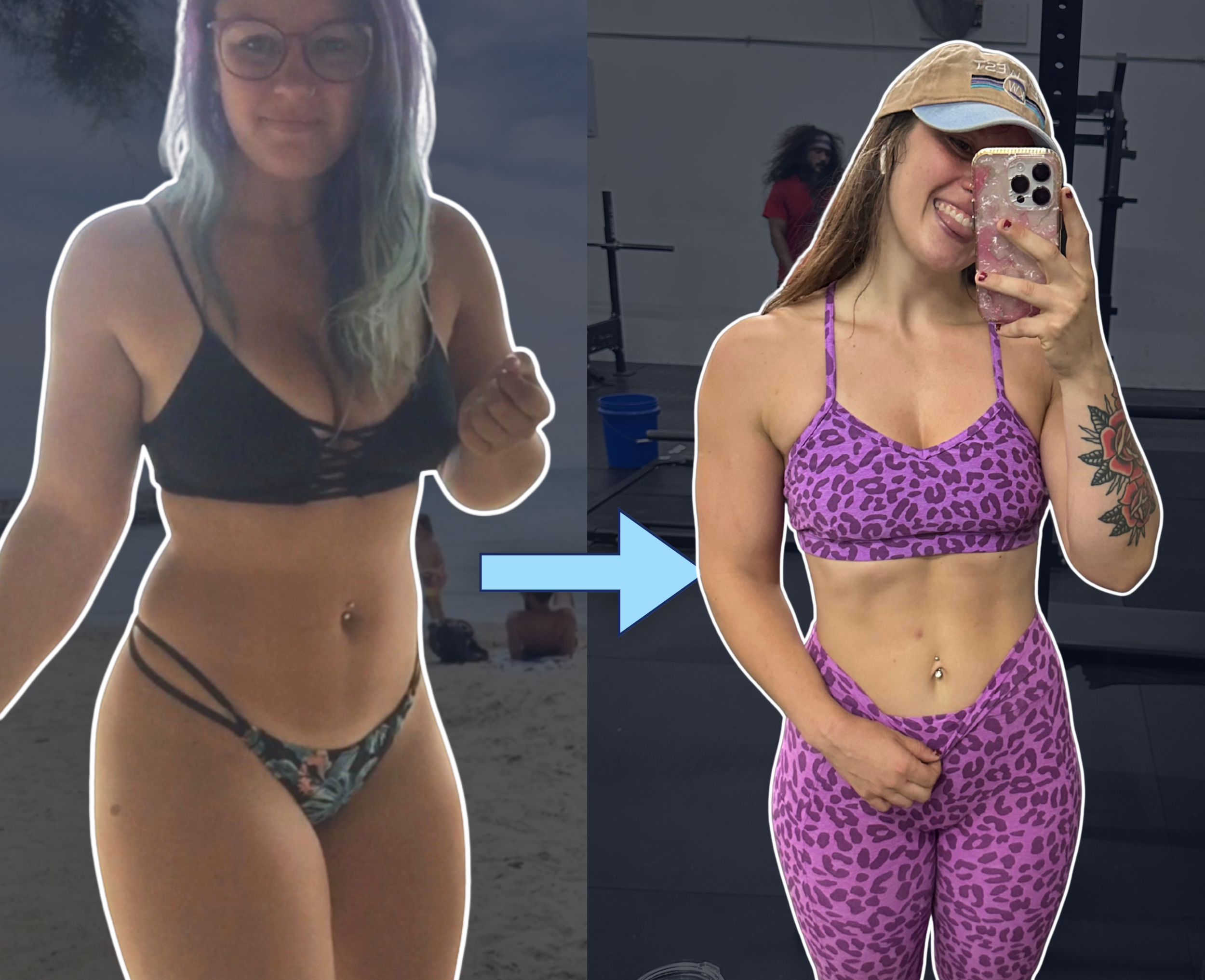
Is Cardio King for Weight Loss?
Cardio is one of the first things people tend to consider on their fat loss journey. And there are two main types of cardio people like to talk about for fat loss: Zone 2 cardio and HIIT cardio.
“The Fat-Burning Zone”
Zone 2 is your lower intensity cardio. In this zone, you’re able to breathe and talk while maintaining pace and a heart rate of around 60-70%. For many people, zone 2 may actually be walking.
You’ll hear a lot of hype around zone 2 cardio because research shows that it improves your body's fat oxidation efficiency over time. Basically the more you exercise in this state, the better your body gets at using your body fat as fuel. That sounds pretty dang good… except when you go back to the science of fat loss, at the beginning...
Remember, it is the calorie deficit that matters.
Your body actually does this through other times of the day as well. Our body changes which systems its using for energy multiple times throughout the day. This does not matter for your fat loss. The deficit matters.
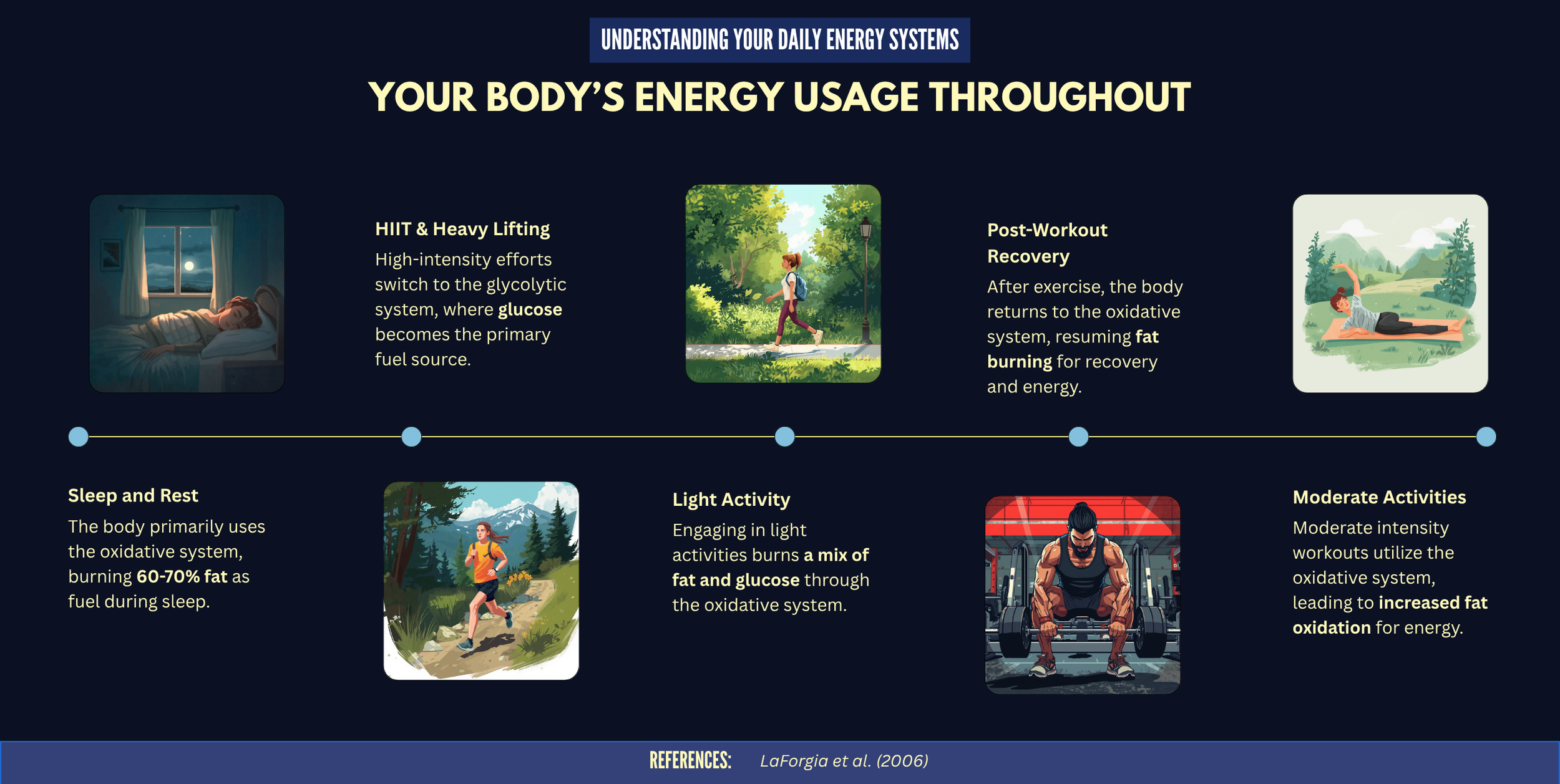
The point is, our body shifts between different energy systems throughout the day; so zone 2 cardio for the fat-burning benefits really isn't anything crazy or special. The caloric deficit is what’s crucial for fat loss, not the energy system your body happens to be in.
You can use fat as fuel for your cardio by targeting zone 2 cardio, but if you’re still in a caloric surplus or at maintenance, you will continue to gain weight or sustain it. The “fat-burning zone” doesn’t really matter.
“The After-Burn Effect”
HIIT, or high intensity interval training, is another big one that is often programmed for fat loss goals. We program it too. This may look like sprints, for examples, where you’re doing a short burst of 85% or more of your max heart rate and then allowing your body to recover. The goal is for you to push to nearly an all-out effort.
HIIT training is loved on social media for the “after-burn effect,” otherwise known as EPOC (Excess Post-Exercise Oxygen Consumption). And this really does happen, where your body continues to burn extra calories after the fact.
The extra calories burned aren’t ground-breaking, but they do count towards something. Its usually around ~50-150 extra calories up to 24 hours after the session. That said, this style of training isn’t usually recommended to start off with for sedentary individuals because progressive overload is also crucial when you start exercising.
This is a good method, if you find it enjoyable, and if your body is prepared for this level of intensity on your journey! But its nothing crazy and it won’t make or break most people’s journey. What will, is finding what you enjoy when you’re going the cardio route.
Which Version of Cardio is Better?
When it comes to choosing which style of cardio to do in the beginning of your fat loss journey, I almost always recommend starting with steady state, first. Focus on keeping at a pace where you’re able to maintain your breath and talk.
If you’re already pretty active and incorporate steady state, HIIT may be a great option for an extra bit of push and calorie burn. If you’re at this level, I would incorporate a balance of both HIIT and steady state, for your recoverability. So you’re not just doing HIIT all of the time.
That said, HIIT is not necessary, although it is helpful if you have the energy and drive for it! For your steady state, you can always choose lower impact cardio as well, like swimming. You do not need to run or jog as your only option for cardio.
So… yes, cardio does matter, but it’s not the true game-changer when it comes to sustainability. If cardio alone isn't the game-changer… then what is?
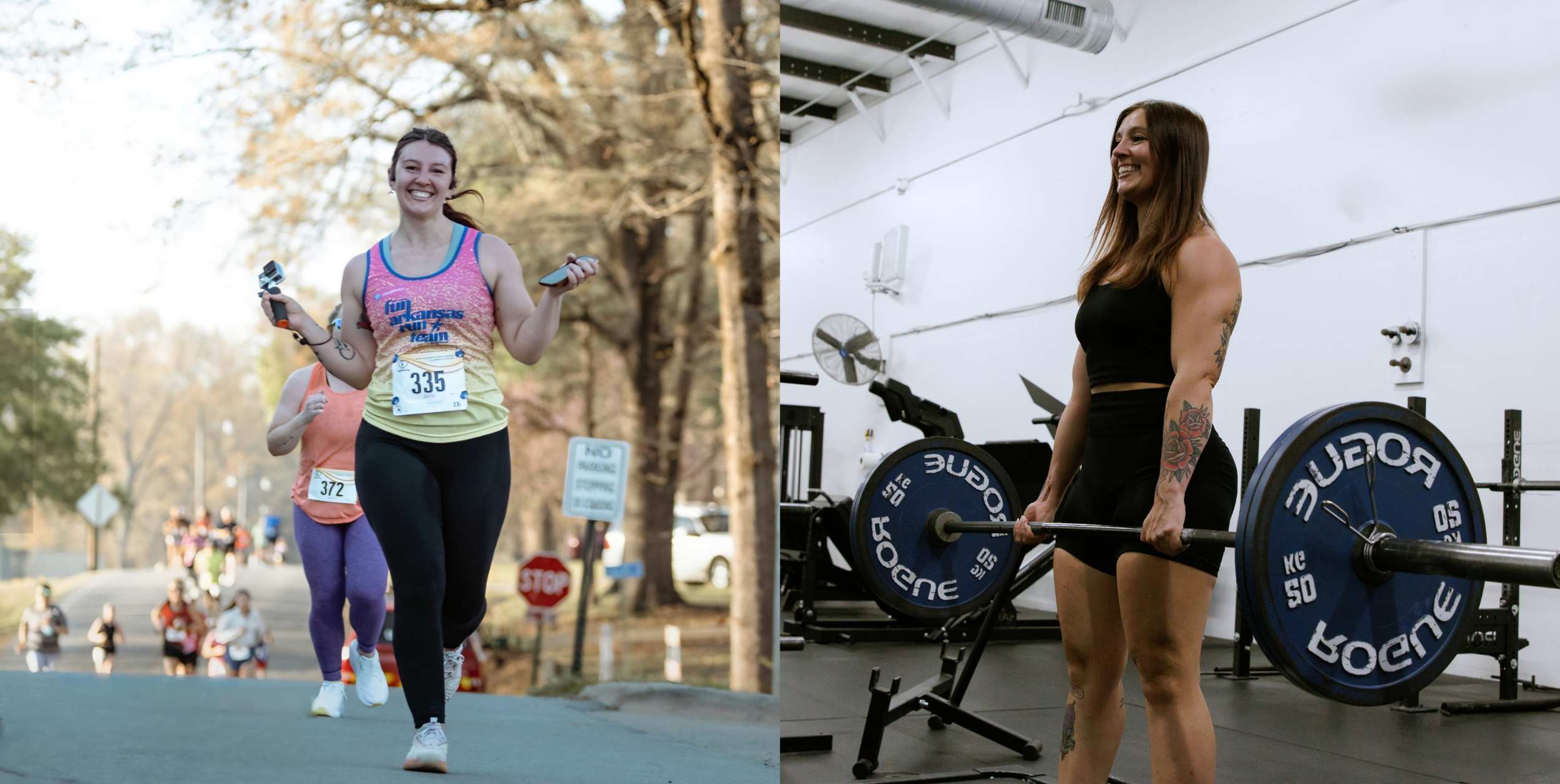
Why More People are Choosing Strength Training for Fat Loss
When we compare cardio and resistance training for fat loss, research consistently shows that resistance training is one of the biggest helpers for long-term sustainability of your fat loss results.
Building Muscle Burns More Fat
There’s a chance someone’s told you “building muscle means you’ll burn more fat*.*” Well, this is true.
As you build muscle with time, your body needs more energy to sustain your muscle mass. Your BMR (basal metabolic rate) naturally begins to increase with time, the more muscle you build. This only works if you’re incorporating progressive overload into your training, though!
The ability to increase your BMR through lifting is a somewhat-slow, but rewarding process for sustainable fat loss.
For every pound of muscle you build, your body burns ~6 extra calories per day at rest. Let’s say you build 10 pounds of muscle. While its not a lot, that muscle mass alone will increase your BMR by around 60 extra calories per day.
That 10 pounds of muscle could theoretically lead to a monthly deficit of about 1,800 calories, without needing to exercise in order to achieve it. 60 calories x 30 days (in a month) = 1,800 calorie deficit.
As you build more muscle, this adds up. That said, building muscle is a long-haul game. The process takes much longer than fat loss tends to, especially for women.
Lifting vs. Cardio for Energy Expenditure
That said, lifting also helps us to burn calories during the workout session, the way cardio does.
Depending on intensity levels and exercise selection, resistance training can burn ~220–400 calories within a one hour lifting session. But this varies greatly. Just like with cardio, it’s all based on the exercises that you’re doing and the intensity of it. For example, compound exercises (squats or bench) are going to burn far more calories within the session than isolation exercises (calf raises or bicep curls).
And just like with HIIT, lifting leads to a higher EPOC (or “after-burn effect”). Around 50–150 calories can be burned over the next 24-38 hours after lifting. This is especially true when incorporating compound lifts, again. And the EPOC “window” tends to last longer for resistance training than it does for HIIT.
That said, overall, cardio generally burns more calories per session, but the total calorie gap narrows significantly when you factor in all of the other benefits.
The following data comes from Harvard Health, based on a 155 lb person:

Over months and years, strength training adds up in a way that makes it so you don’t have to work as hard to maintain your fat loss. For those struggling with nutrition on their cut, resistance training can be a game-changer for keeping your TDEE higher through your BMR and physical exercise.
… And while not having to rely on running or other forms of cardio as your main fat loss driver.
Why You Should Do Both
Research shows the most effective approach to fat loss combines both, and real life application from myself and client results shows this too.
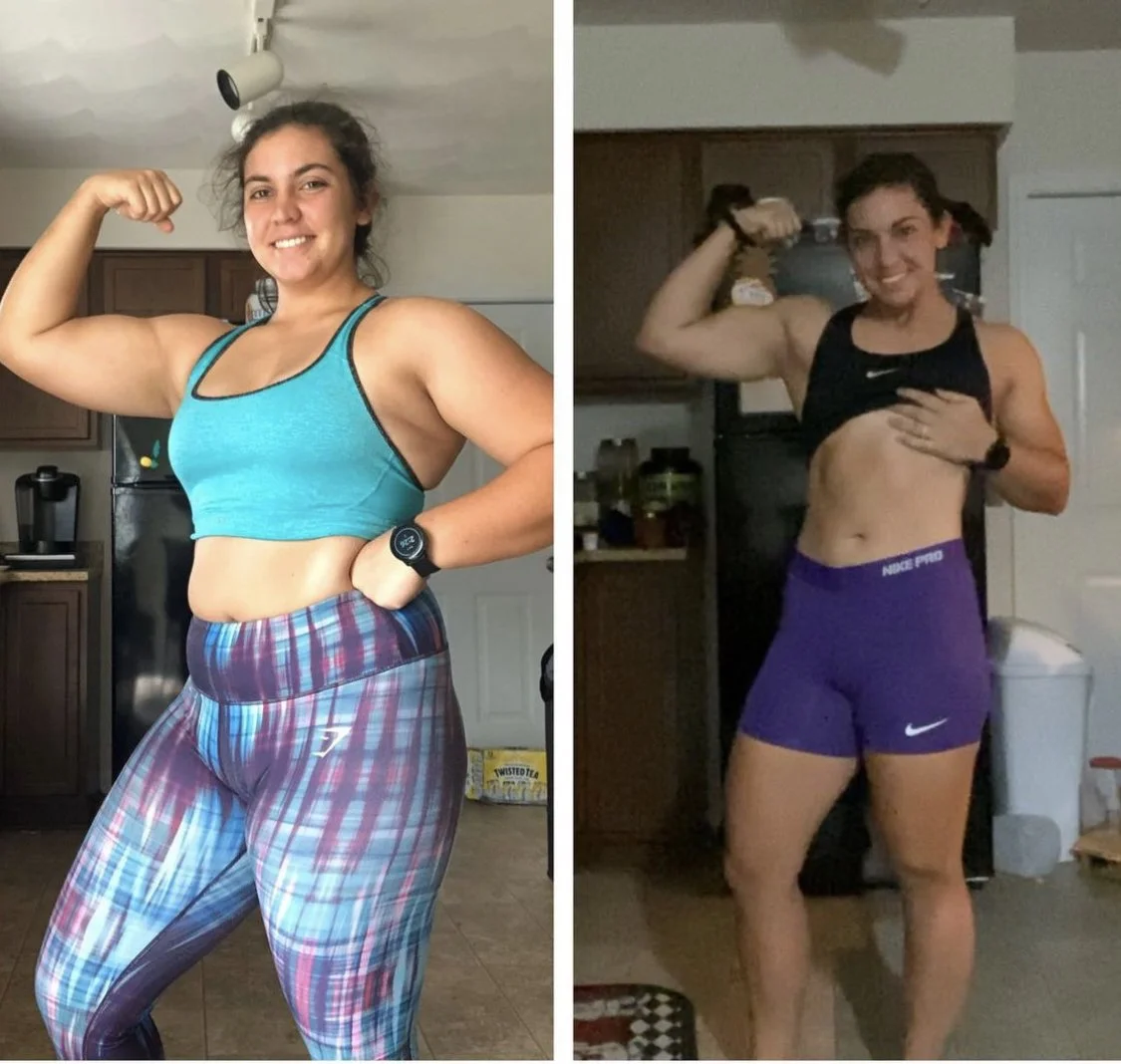

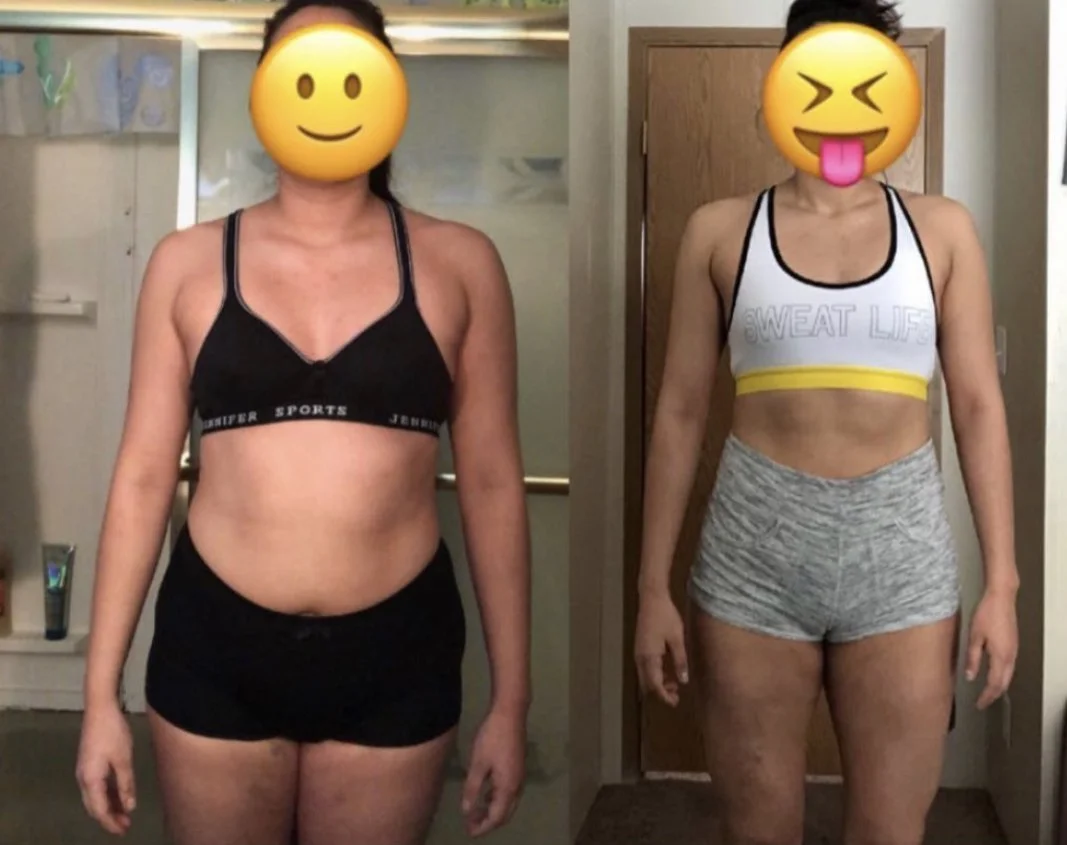
There was a study over an 8 month period that took over 100 adults for supervised training 3x/ week. They were either assigned cardio, resistance training, or a combination of both. They weren’t required to track or report their nutrition; it was all exercise based!
The group that had the combined cardio and resistance training saw the most dramatic changes in their overall body composition. They experienced both muscle gain and fat loss over nearly a year. That said, the cardio-only group put in less time and hours in the gym than the combined group. Over time though, the impacts of balanced cardio and lifting can allow for massive changes in body recomposition, as well as sustaining the fat loss without conscious effort.
And remember, these results were all without tracking nutrition. Knowing that these results were sustained without, shows how the power of these habits alone. If you’re able to track your nutrition for your deficit, the results can be all the more powerful!
TDLR
Long story short, this is what you really need to know when it comes to the exercise you choose for your fat loss journey:
Cardio is a great opportunity for increased calorie burn for TDEE, especially HIIT.
Steady state does the job too, and usually burns more than lifting for TDEE. Steady sate is better for beginners than HIIT.
Resistance training also burns calories during the session. Because lifting is often lower intensity, this can make it more powerful for sedentary individuals.
Resistance training is powerful for long-term, sustainable fat loss. It will make your journey easier with time, requiring less and less effort for you to sustain your progress.
Do both. The ultimate goal is 2x/ week for both as a minimum. Don’t overwork yourself and progress slowly, with progressive overload.
And remember, none of this matters if you’re not actually in a caloric deficit. Oftentimes if fat loss is still not occurring with the above strategies, nutrition is likely the biggest missing link.
Looking for Guidance on Your Fitness Journey?
Our mission is to help make your journey enjoyable and sustainable. We focus on finding balance in your plan and make adjustments weekly based on your needs.
Fill out a coaching application to learn more about how we can help you!

Sources
Broskey NT, et al. Effect of aerobic exercise-induced weight loss on the components of daily energy expenditure. Medicine & Science in Sports & Exercise. 2021;53(10):2164–2172.
Pratley RE, et al. Strength training increases resting metabolic rate and norepinephrine levels in healthy 50- to 65-yr-old men. Journal of Applied Physiology. 1994;76(1):133–137.
Villareal DT, et al. Aerobic or resistance exercise, or both, in dieting obese older adults. New England Journal of Medicine. 2017;376(20):1943–1955.
Willis LH, et al. Effects of aerobic and/or resistance training on body mass and fat mass in overweight or obese adults. Journal of Applied Physiology. 2012;113(12):1831–1837.
LaForgia J, Withers RT, Gore CJ. Effects of exercise intensity and duration on the excess post-exercise oxygen consumption. Journal of Sports Sciences. 2006;24(12):1247–1264.
Wolfe RR. The underappreciated role of muscle in health and disease. American Journal of Clinical Nutrition. 2006;84(3):475-482.
Schuenke MD, Mikat RP, McBride JM. Effect of an acute period of resistance exercise on excess post-exercise oxygen consumption. European Journal of Applied Physiology. 2002;86(5):411-417.
