
How to Breathe and Brace Your Core for Heavy Lifting | The Valsalva Maneuver
You might be here because someone has told you that you should be “bracing your core” when you lift, but you don’t know wtf that means. 👀
Knowing how to brace your core is crucial for protecting your spine when lifting. Today we’re going to make it super simple for you to understand and then give you some tips for practicing the different techniques from home!
What Does “Bracing Your Core” Mean?
Your core includes your entire torso; your deep core, obliques, abs, lower back, pelvic floor, and diaphragm.
These muscles should all work together to create intra-abdominal pressure through your torso. The goal is to hold your spine stable and neutral, while the rest of your body moves through space to perform your exercises. This is what keeps your spine safe under load.
You can play around with how much internal pressure you’re creating as you brace. When you’re working with lighter weight or easier isolation exercises like bicep curls or lat pull downs, you can brace lightly. The goal is to maintain a neutral spine despite the additional load moving around.
Now when you’re lifting heavy, you perform something called the Valsalva Maneuver, which allows you to hold that pressure under much heavier loads.
The Valsalva Maneuver
This is a lifting technique where you brace while holding your breath. This helps to increase intra-abdominal pressure and provide additional protection around the spine.
You’re using your breath as a tool for protection to create extra pressure within your torso. When doing this, your body is able to safely work up to and manage heavy, heavy loads. This is how people work up to lifting triple their body weight with a healthy spine.
If you’re not bracing properly, the load from the weight transfers into your spine, rather than into the core. This can lead to slipped discs and low back injuries. Deadlifts are a common exercise you’ll see people get injured with due to lack of knowledge on proper bracing. It's important you know how to brace before you start lifting heavy.
That said, be careful with this technique if you have high blood pressure, a heart condition, or a hernia. Check with your doctor about recommendations on whether this technique is safe for you, if you do!
The Steps to Bracing with Heavy Lifts
Step 1
Make sure that your spine is in a lengthened / tall position, and that your pelvis is neutral.
For many people, you might even want to think of your pelvis as being “slightly tucked under” in order to get it truly neutral.
Step 2
Before you pick up the weight, start first by taking ✨a deep breath into your stomach, sides, and your lower back.✨ The goal is to expand your torso outwards in all directions.
Once you take your deep breath, you’re going to hold it.
Step 3
Now you want to brace or squeeze into your core while still holding your breath. ✨Imagine someone is going to punch you in the stomach.✨ That natural tightening your core is what you want to do when you engage with a heavy lift.
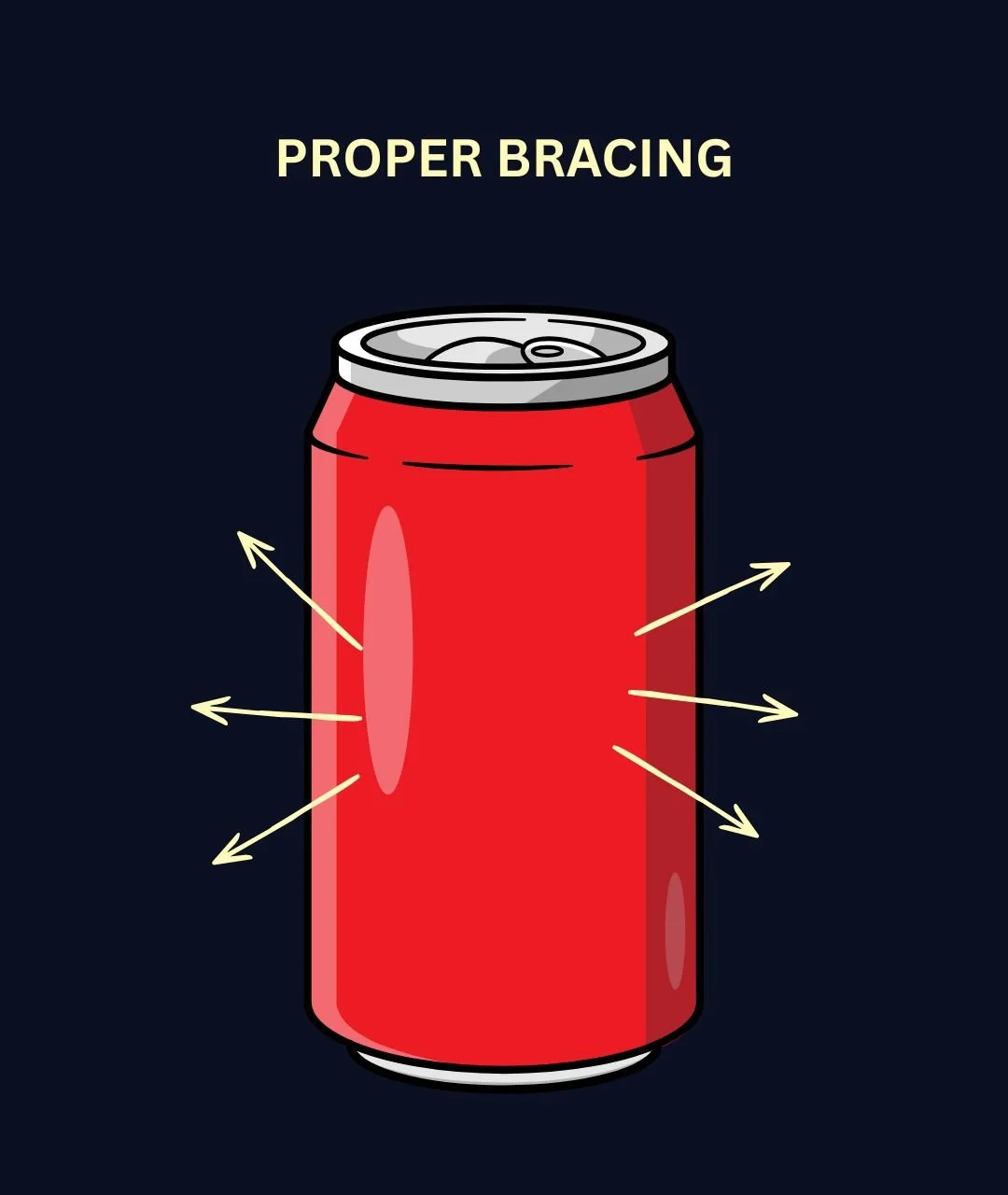
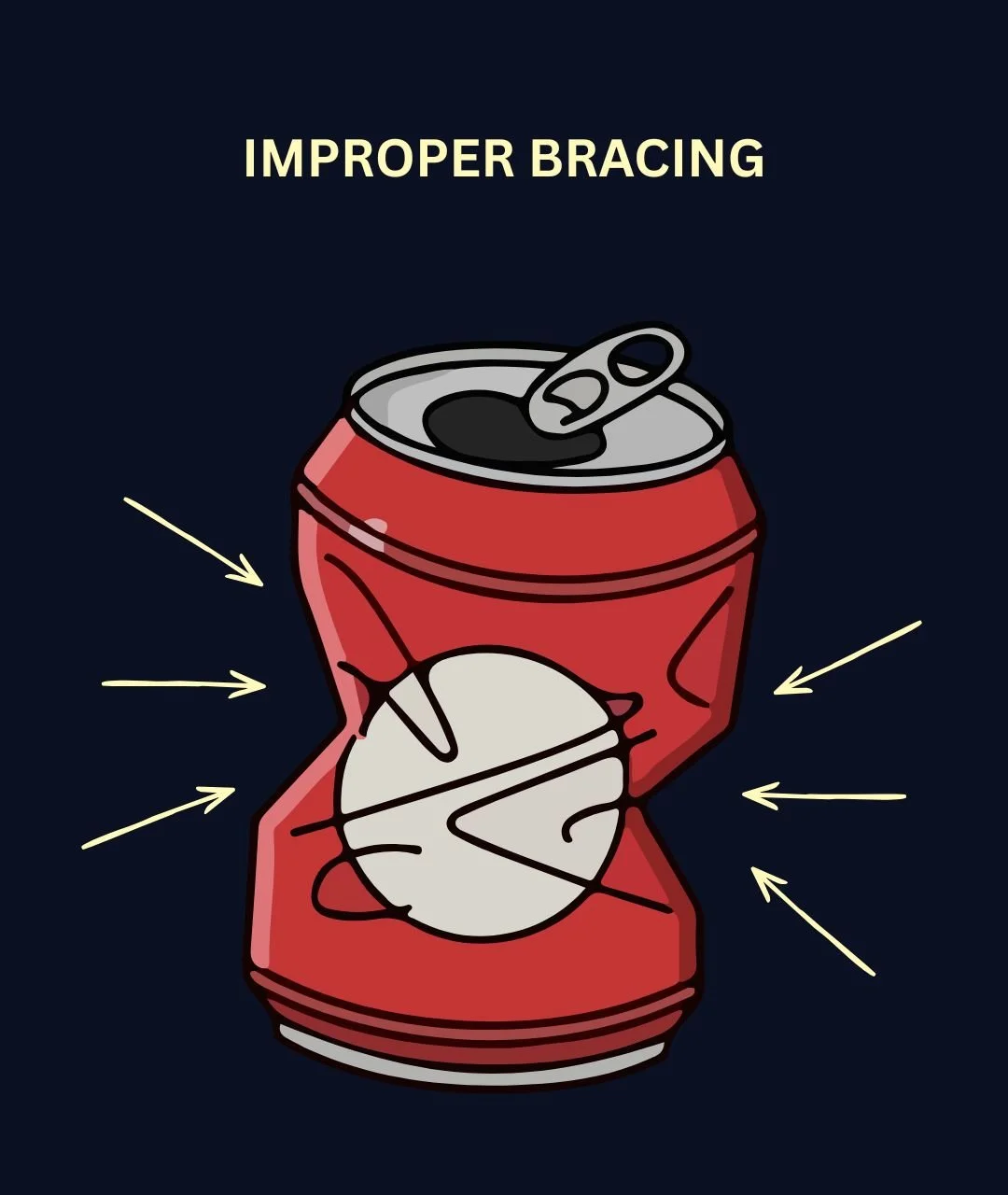
A lot of people like to compare your torso to being a soda can when bracing.
Think of creating outward pressure on all of the “walls” of your torso, so that the soda can (your torso/spine) doesn’t collapse under the weight.
Step 4
When you’re ready and stable, begin your lift.
Continue to hold that 360 degree intra-abdominal pressure in your torso throughout the entire lift. As the weight gets heavier, you’ll find you have to brace harder to create more tension for your spine.
Hold this pressure throughout the entire lift, until you’ve completed the rep.
Step 5
If you're doing more than one rep, you’ll want to “reset” at the top. This means you're going to repeat steps 1-4 for all of your remaining reps, when working with heavier weight.
When you’re working with heavy weight, don’t rush your reps or the “reset” phase. Treat each rep independently to keep the lift safe when lifting heavy.
Now Let’s Practice Bracing WITHOUT Weight
Before you get to working with heavy weight, it's a good idea to get some practice first. If you’re curious, you can even try both of these right now!
Practice #1: Diaphragmatic Breathing
Lay down on the floor and put one hand on your stomach and the other on your chest.
When you inhale, you should feel your stomach rise, and your chest stay still. This is called diaphragmatic breathing.
Practice #2: Light Bracing
Once you nail this, work on breathing 360 degrees into your torso. Get into the same position as before, with your hands on your stomach and chest.
Instead, you’re going to feel your stomach expand forward, your sides expand outward, and your lower back push into the floor.
If you find that you’re having a hard time with practicing these things, you can continue to work on your skills of bracing and core control by practicing additional exercises like deadbugs, bird dogs, and planks.
These are low impact exercises that can help you get stronger in your core and with basic levels of bracing. Once you’re able to manage these things, you can start working up to moderate and heavier weights.
Mistakes People Make with Bracing
We’re going to do a speed run of some things to avoid when you’re practicing bracing:
No sucking in your stomach; this is the opposite of what you want!! Think about the soda can.
Brace before you lift the weight, not once you’ve already engaged with it. This includes un-racking the bar.
Don’t let go of the tension halfway through the lift; this is the worst part to let go. Hold tight throughout the entire movement & don’t let go until the rep is complete
Final Notes
Bracing is a crucial skill for heavy lifting. It can be more intuitive for some and a struggle to figure out for others. Take the time to practice the different exercises if you find you struggle with the concept. You can do this in the morning or evening to help you relax and start or end the day, as well!
If you're struggling to get it figured out, this is something that you'll get comfortable and more connected with over time.

