Have you ever told you to “squeeze down the sides of your back” to engage your lats during a pulldown, but you just cannot seem to connect with how to squeeze there? You can feel stuff moving around back there, but you can’t exactly pick apart what you’re feeling?
That’s a common struggle when it comes to training, especially if you’ve got a lot going on with prior injuries, stiff muscles, muscle or postural compensations, and being newer to training.
If that sounds like you, you’re like me at the beginning of my fitness journey. I don’t think I could properly feel my lats or my shoulders until at least 3 years into training. No joke.
Today we’re diving into mind-muscle connection (MMC) and how you can connect better with your body during exercise.
What is Mind-Muscle Connection?
MMC is how your brain communicates with your muscles and body through your CNS.
When you’re doing an exercise, if you intentionally focus on a certain area of your body, you will increase the connection of those motor neurons to that muscle, continuing to provide deeper feedback to and from that area of your body. This is how mind-muscle connection is built.
Focusing on where you want to feel your body contracting, stabilizing, and supporting during an exercise is something you want to continue to practice every time you go into a session.
The Benefits
Improving mind-muscle connection helps you in improving form, avoiding compensations when exercising, and makes a significant difference in your muscle growth and strength the more connected you are to your body.
Certain people can connect really well with their bodies, while others can take others years to develop what someone else connects with right away (like me with my lats). You’re not to worry about that. Just recognize that its normal and okay to not connect with certain areas of your body the way other people may. I am in that boat where it takes me a little longer to connect with areas of my body too. It’s all just practice.
Whether you’re just getting started at the gym or more of an intermediate lifter, these tips can be helpful for all levels!
Let’s practice right now:
This is a technique that I like to take new lifters and clients through, and something that I want you to practice as well:
Stand up from where you are. You’re going to squat as deep as you can, comfortably and with good form.
Start off by just focusing on your left quad. Do this for one set of 10.
On the next set, focus only on your right side. Do this for one set of 10.
On the third set, alternate sides for each rep. Alternate between left quad, right quad, and then both at the same time.
Now you can take these steps and try: rows, deadlifts, push-ups, glute bridges, overhead press, bicep curls, overhead extensions, calf raises, etc.
This is a drill that you can practice to help you build that deeper connection with your body. It should feel stupid easy to control the weight, so that you can shift your focus towards connection.
If you’re a beginner, practice with bodyweight or a PVC pipe. If you’re an intermediate lifter, practice with 10-40% of your 1RM or RPE 1-4.
With time, you should start to feel more activation and connection in your areas of focus. Over the weeks, it may even feel like “unlocking different layers of connection” the more your practice in your sessions.
What happens if you struggle to connect with certain or all areas of your body?
One of the misconceptions with mind-muscle connection is that “if you don’t feel it, its not working,” and this isn’t true. For example, when you’re focusing on your right quad in the above example, it doesn’t mean your left quad isn’t working. It just means that you’re intentionally focusing on a certain area of your body without the noise from other areas.
And if you can’t feel or isolate any area very easily or intentionally, this is also a common struggle too. Give yourself time.
If you’re frustrated because you’re not connecting the way you want to; this is normal. Some common areas that people tend to struggle with are the upper traps, hips, glutes, and shoulder blades.
It takes years to build deeper levels of mind-muscle connection for most people!!
Techniques for Mind-Muscle Connection
Learn Basic Anatomy
Start with General Muscle Groups
The best way to connect with your body is to understand it a little better.
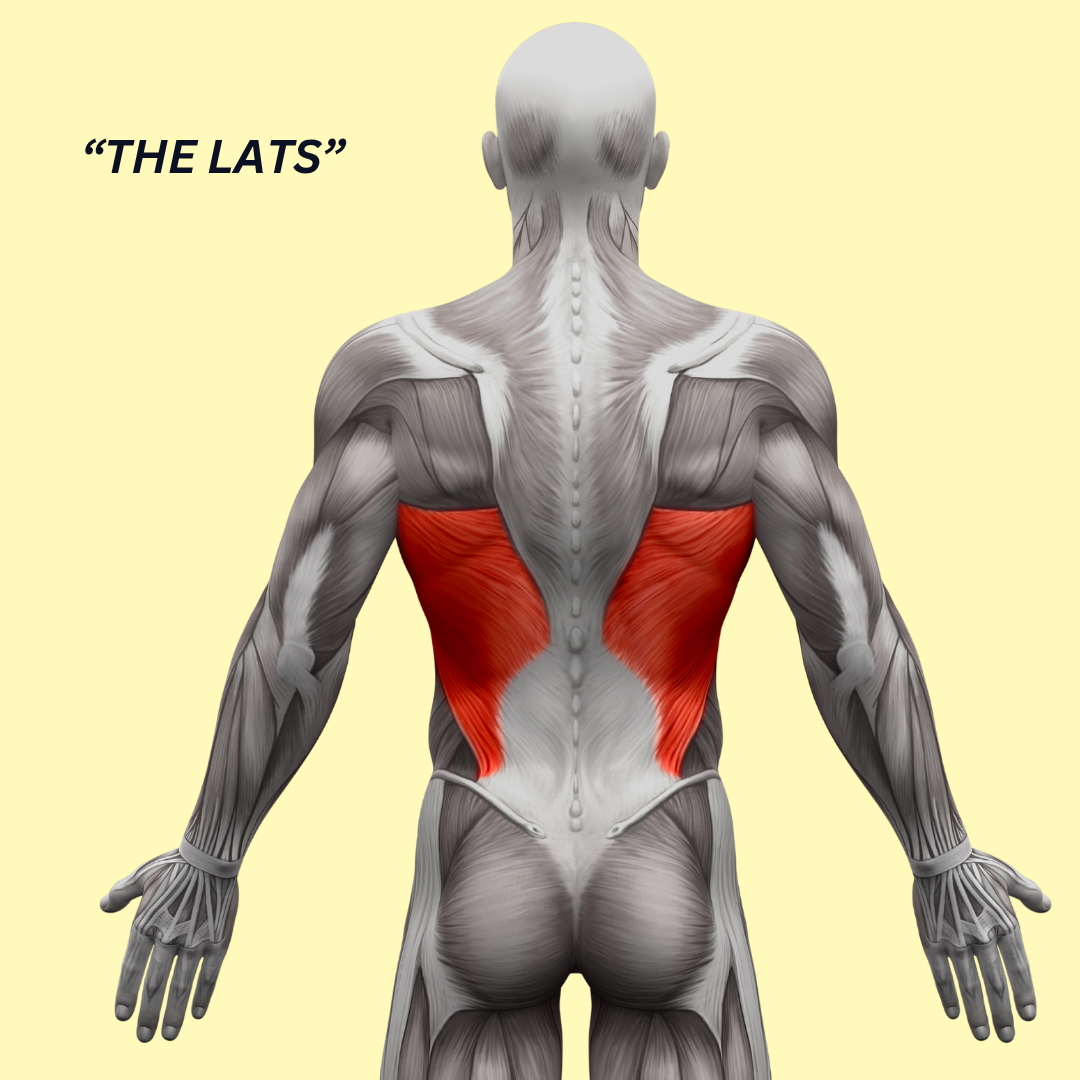
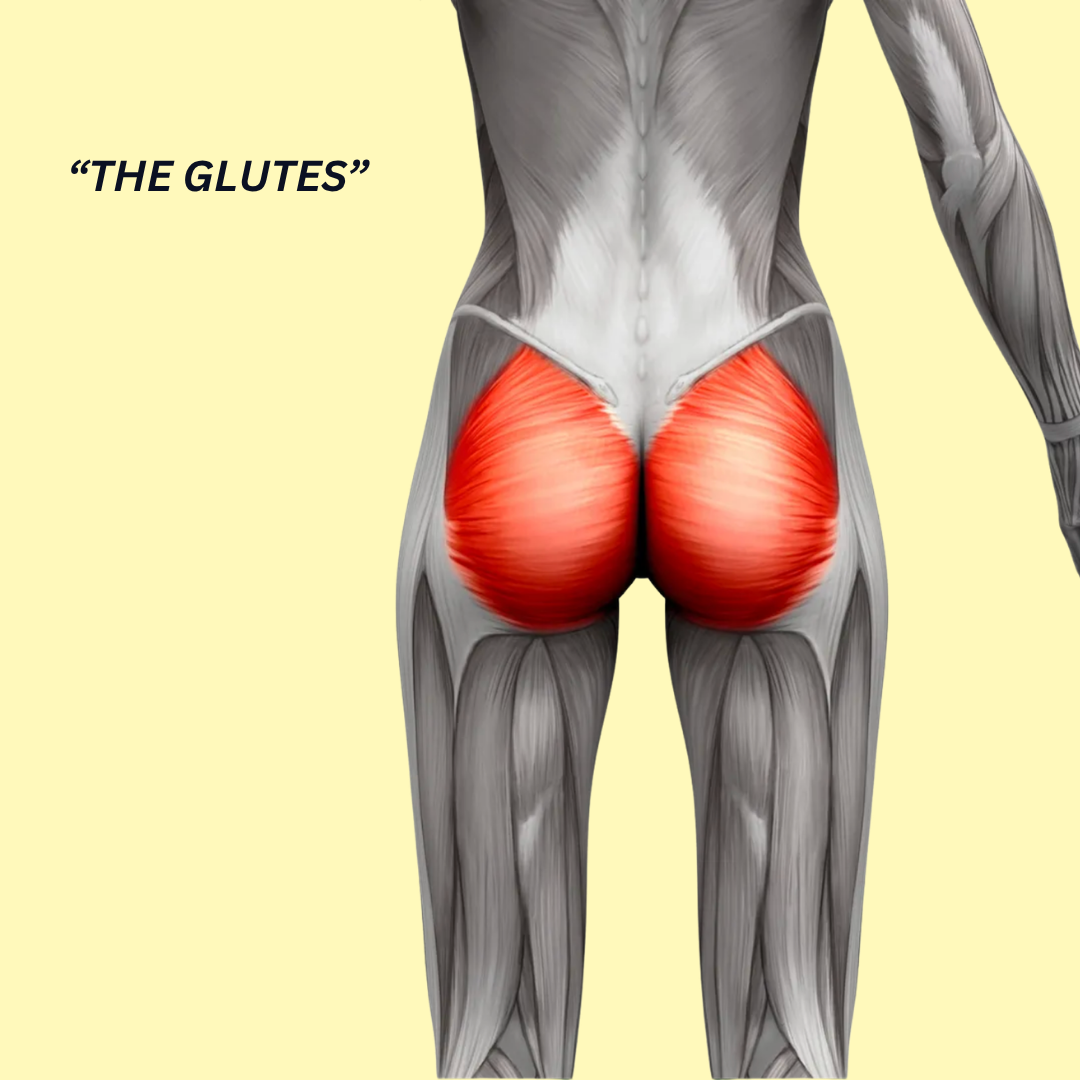
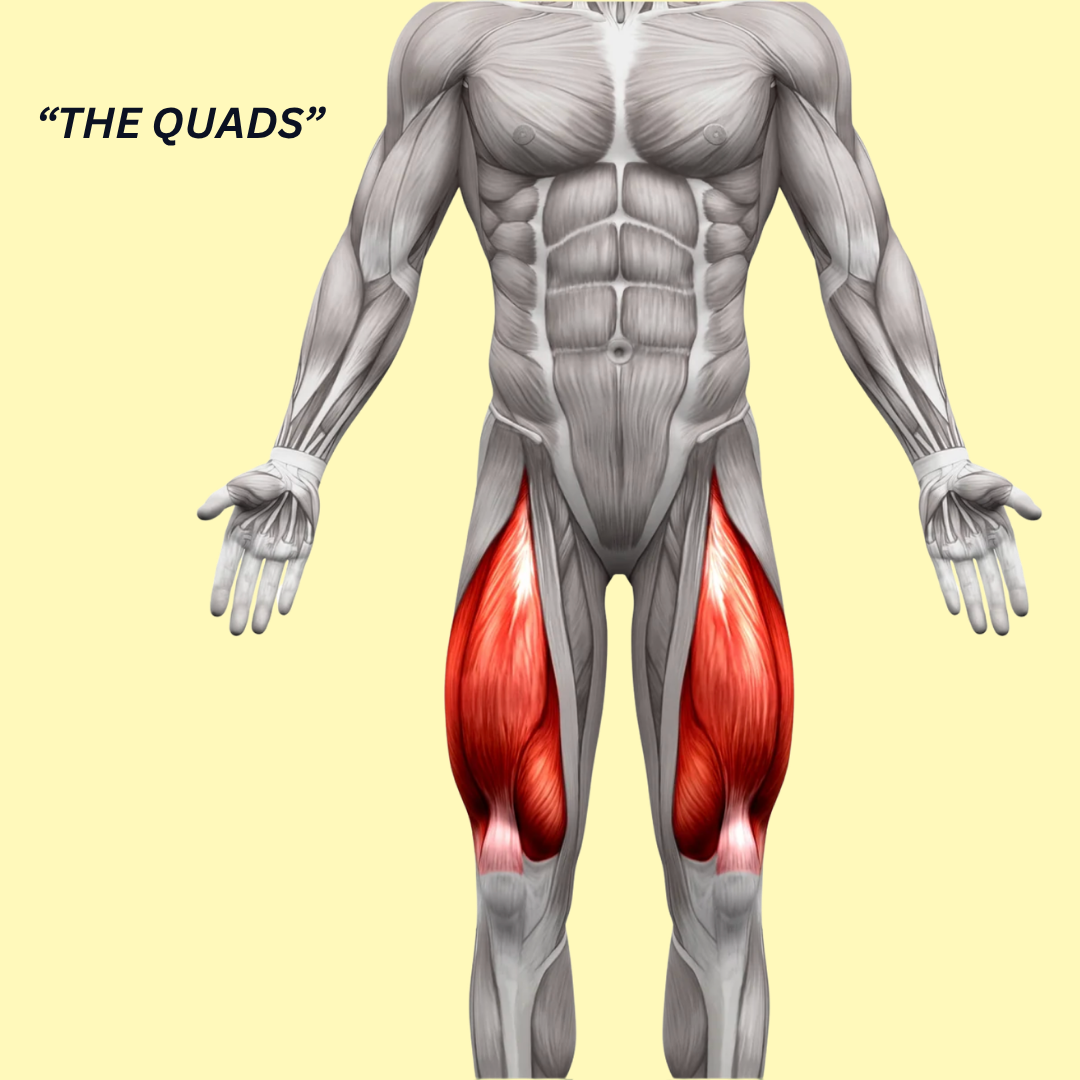
Start with learning or refreshing on some of the basic anatomy. This will be the more superficial muscles of the body - the areas you’re going to focus on most. For example, you lats, glutes, and quads are all superficial muscles.
People usually know when they are training their chest, back, quads, glutes, etc. Start by learning these general areas / muscle groups that you’re training.
Individual Muscle Origin & Insertion Sites
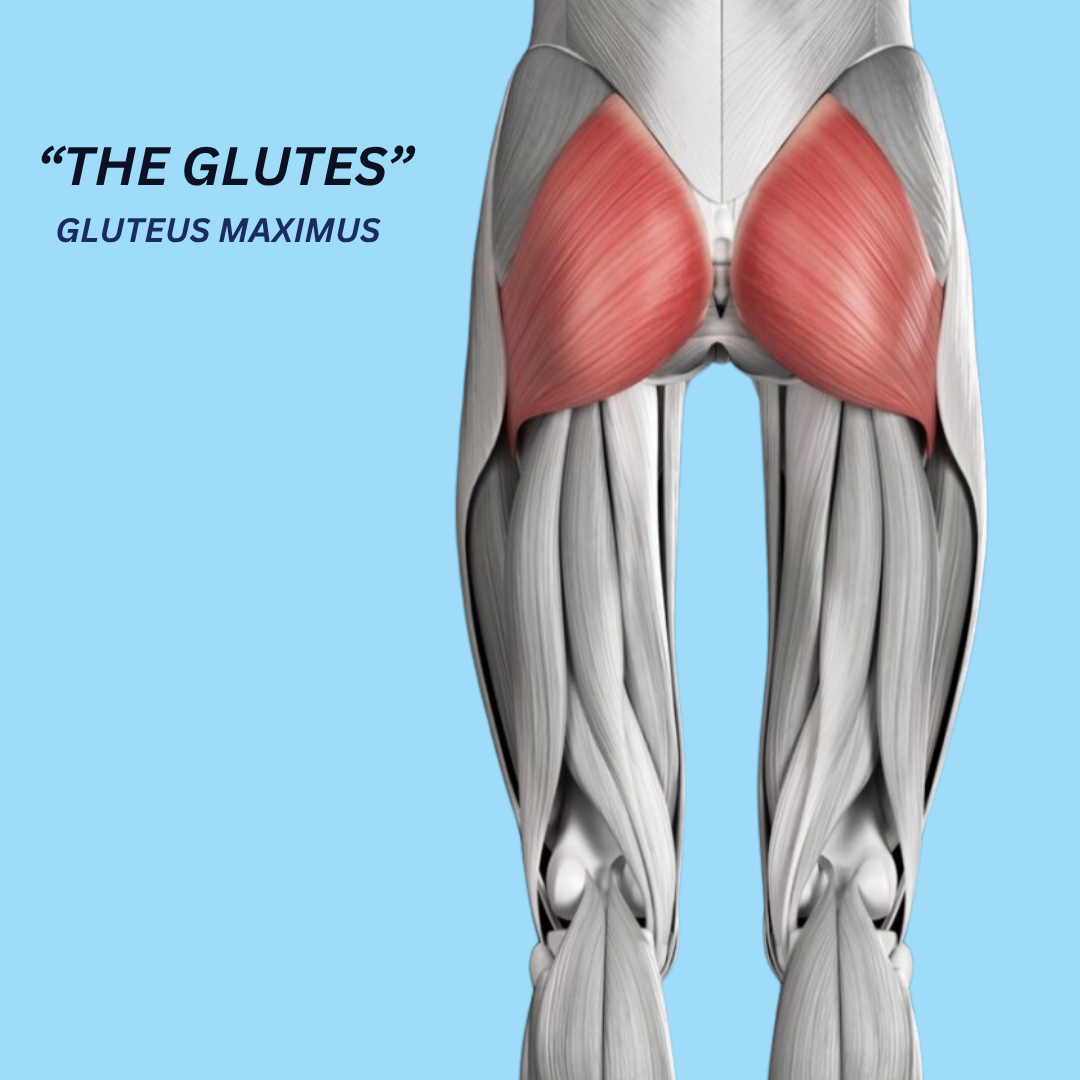
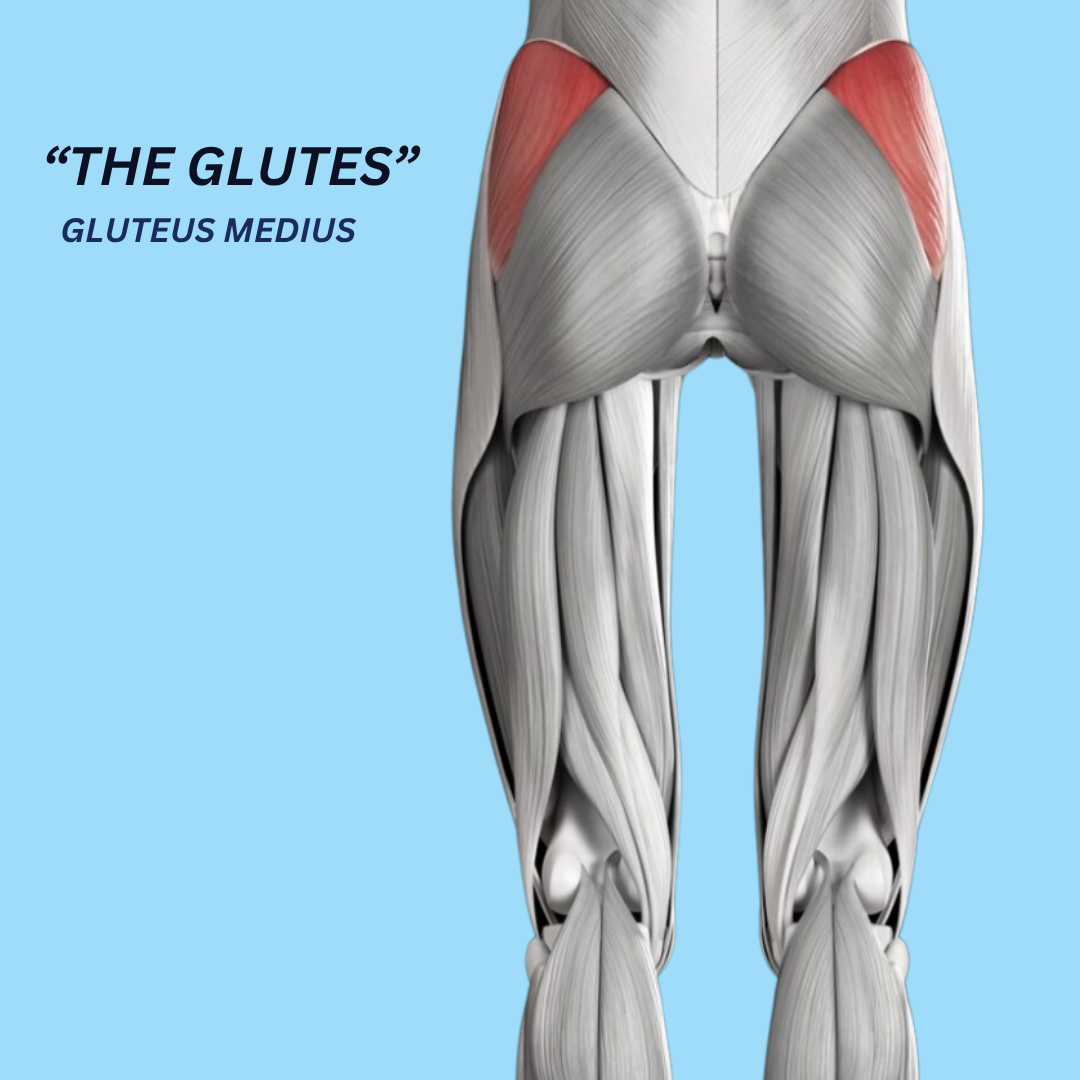
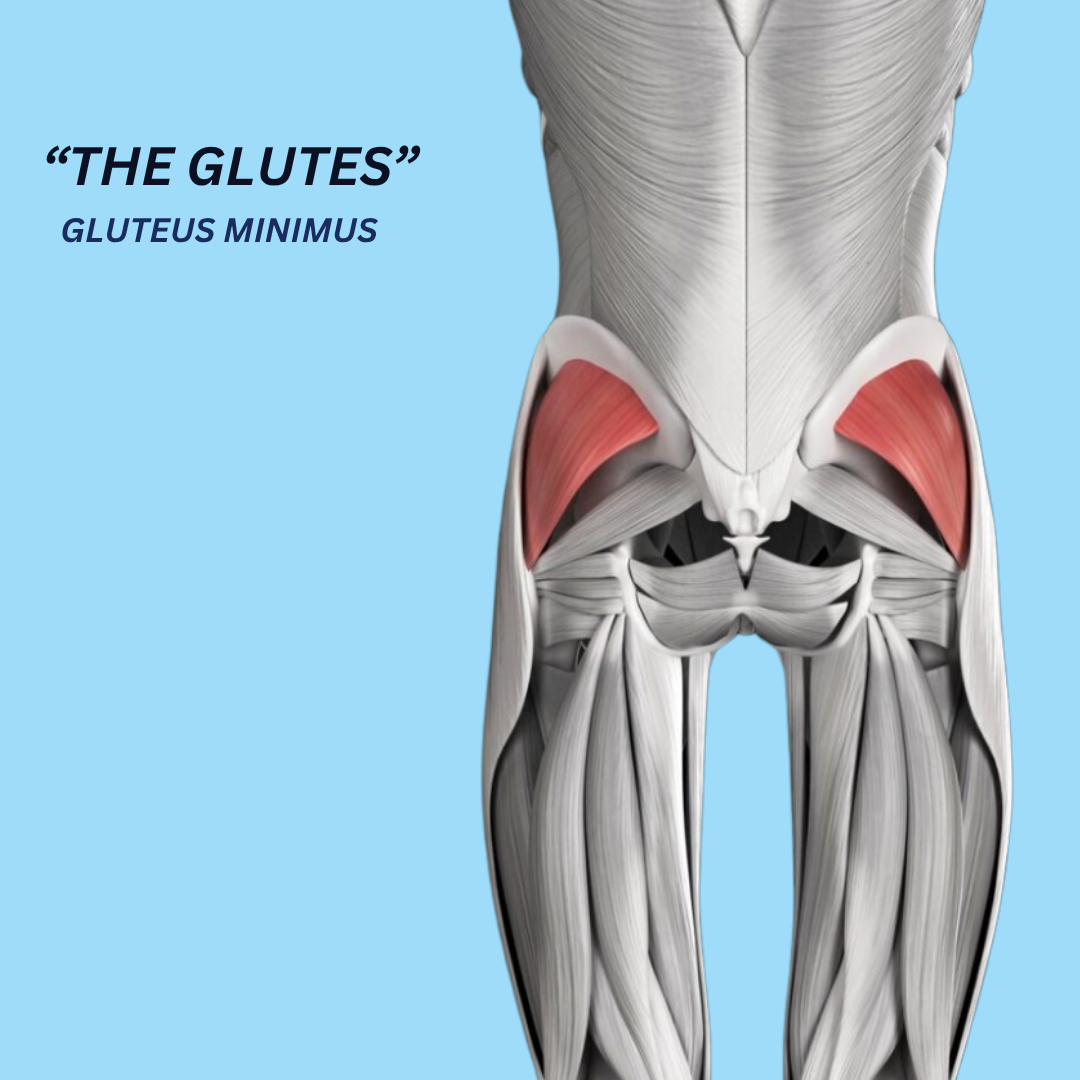
The next thing to learn is how the muscle groups are broken up. For example, the glutes have three sections; the glute max, med, and min.
Each of these muscles function just a little differently than the other to support the body. The glute medius and minimus play a big role in hip stabilization, and can be targeted in different ways based on their different attachment locations.
Working with Your Muscle Fibers
Knowing where these muscle groups connect helps you to contract into the muscles muchhhhh better!!
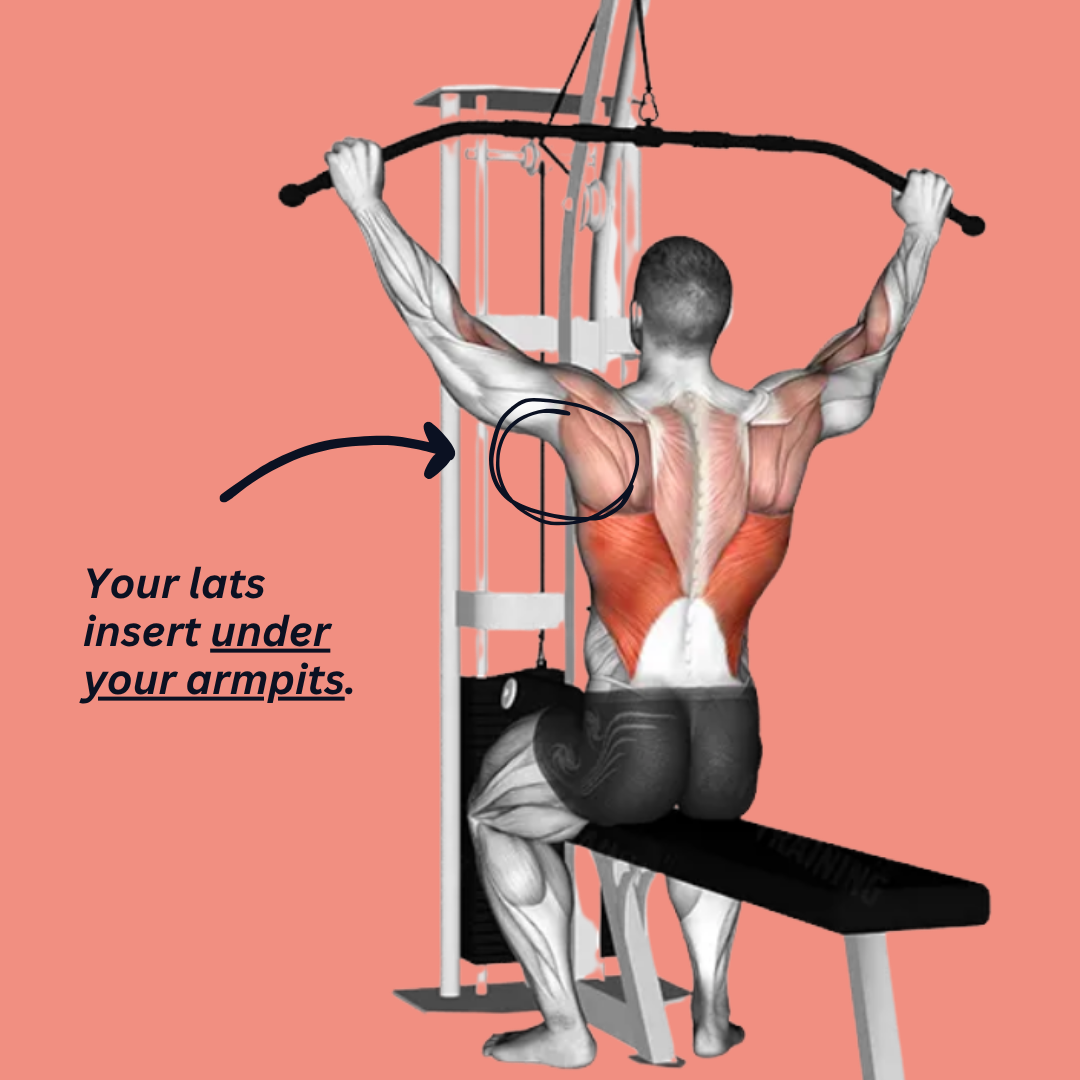
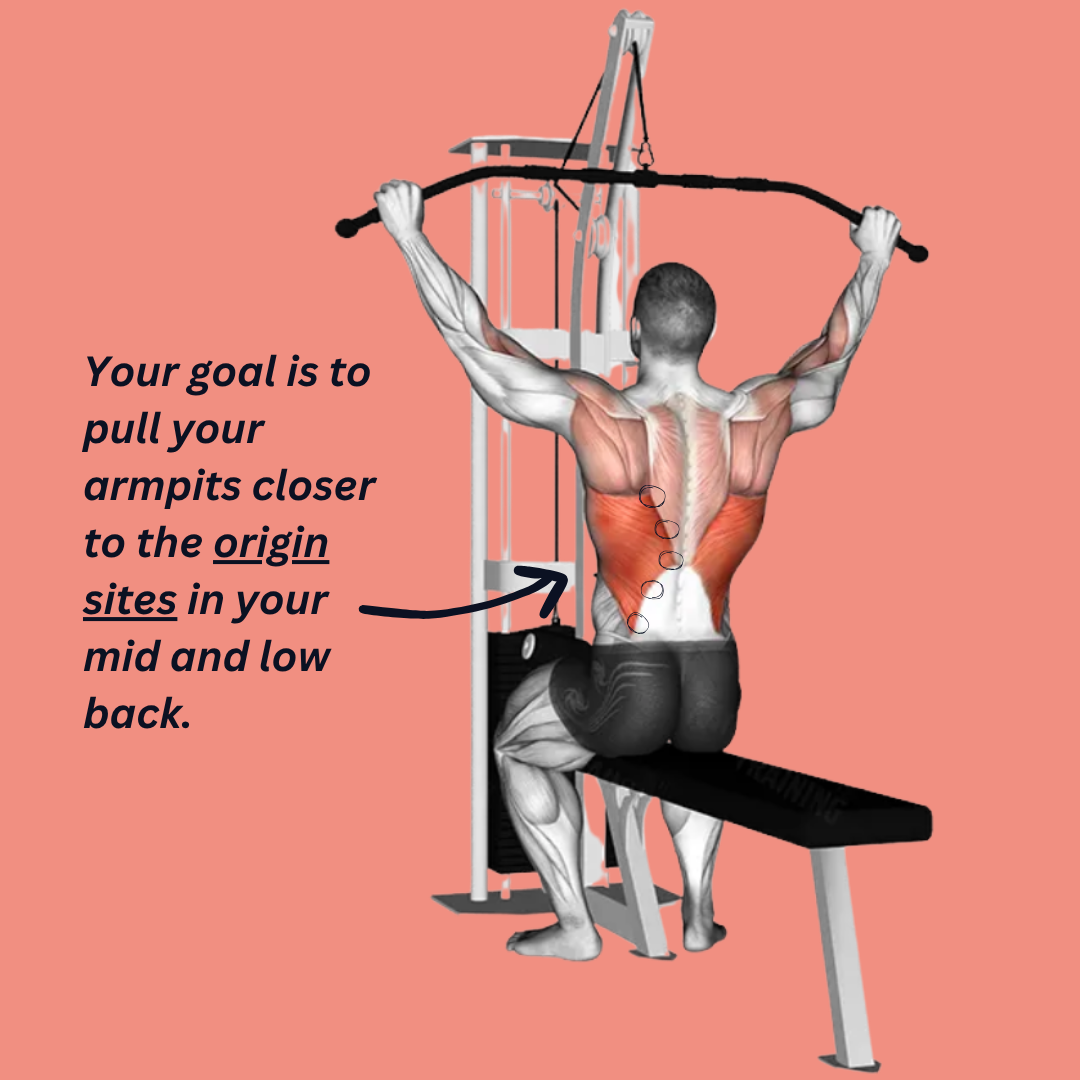
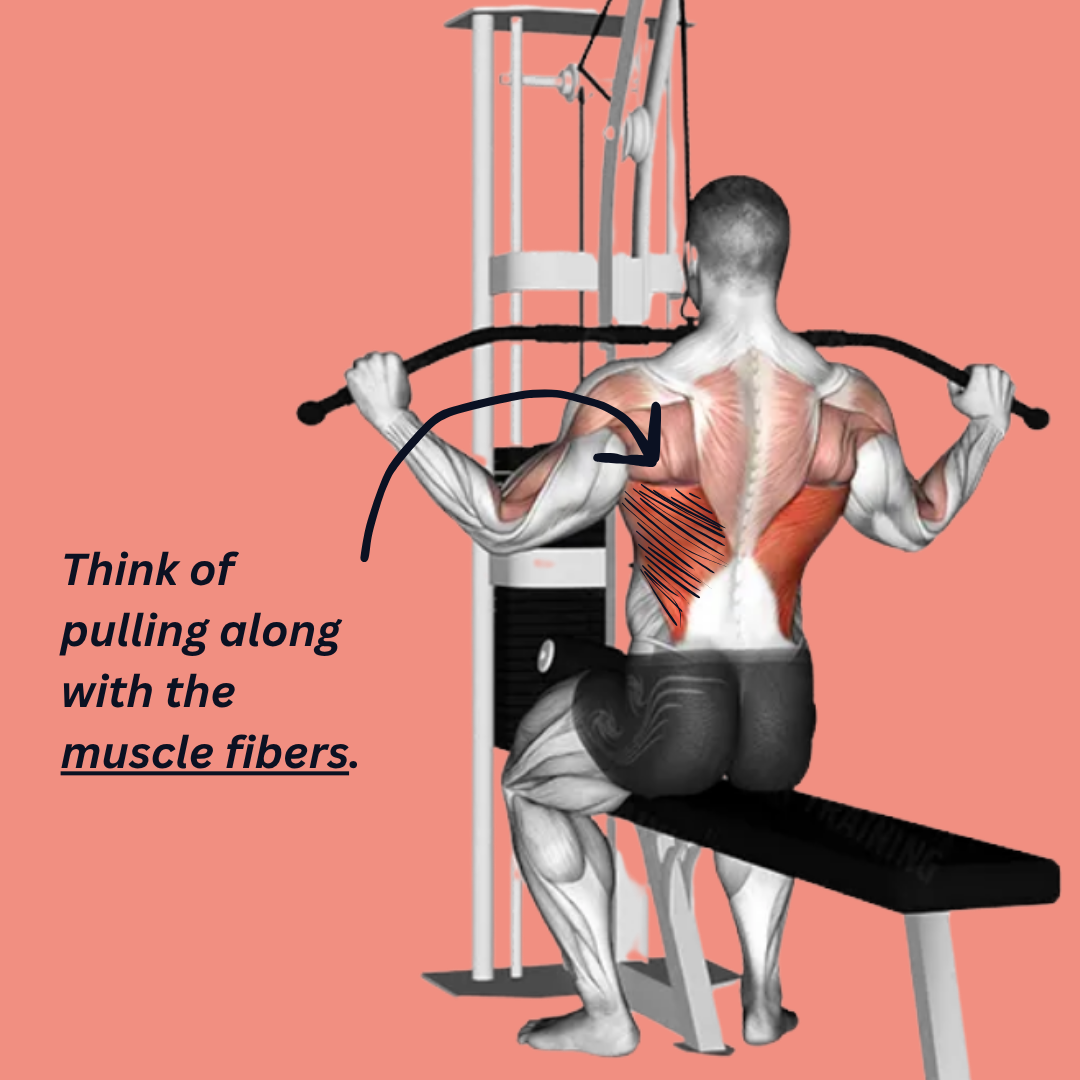
For example, your lats insert under your armpit and connects across your mid and lower back through your spine. When you squeeze your lats, you want to squeeze and engage along the lines of these muscle fibers.
The muscle fibers create lines that connect from the origin location into the insertion location. Where the muscle inserts is the “movable” area of the body, that you want to contract down towards the origin location(s).
For your lats, the “movable” part is under your armpit. So when you’re squeezing into your lats you want to think of think of squeezing from up and under the armpits, down towards the origin sites of your lats (towards the mid and low back, along the spine). This should be the stable, non-moving parts of your back that you want to contract into.
Apply This Over Time
Learning anatomy takes time. Start this journey alongside the other steps.
Start by learning about the areas that you struggle to connect with first. If you struggle with many, start with focusing on one area at a time. Oftentimes, improving in one area will help improve in other areas too.
Learning anatomy will help you to understand where exactly you should focus your attention during the exercise: where to squeeze, where to stabilize, and what exactly is working.
You may have to continue to refresh up on the anatomy a few times, and that’s okay. Doing so before your training sessions can be super helpful!
Focus on Your Breathing
The next thing you want to focus on is moving slow and focusing on your breath. This helps your body relax, and you’ll connect much better when you’re relaxed.
Inhale with the contraction. Exhale slow with the release. Move slow and connect your movement with your breath.
Focus on being present as you do this. Don’t let your mind wander to outside stress. This distraction impacts your connection. Breath work helps you to stay connected, present, and focused.
My Experience
When I first started in the gym in 2013, it was my way of dissociating and focusing on nothing but a good A Day to Remember song.
For the most part, I just exercised for fun and wasn’t as focused on the specifics of my form. Instead of being present, I was usually zoned out and distracted. At the beginning when you’re building new skills, this is the opposite of how you want to approach training, if you can!
Use Physical Cues & Activation Exercises
There are three main techniques that help with bringing better awareness to the areas that you struggle with: physical cues, activation exercises, and isometric holds.
Physical Cueing
While you’re training, you can use your hand to hold or tap the area you want to better activate. This helps you to bring more awareness to where you should be squeezing or pushing into.
You can also have someone hold or tap that area too. This is a technique personal trainers often use for clients, us included!
Examples:
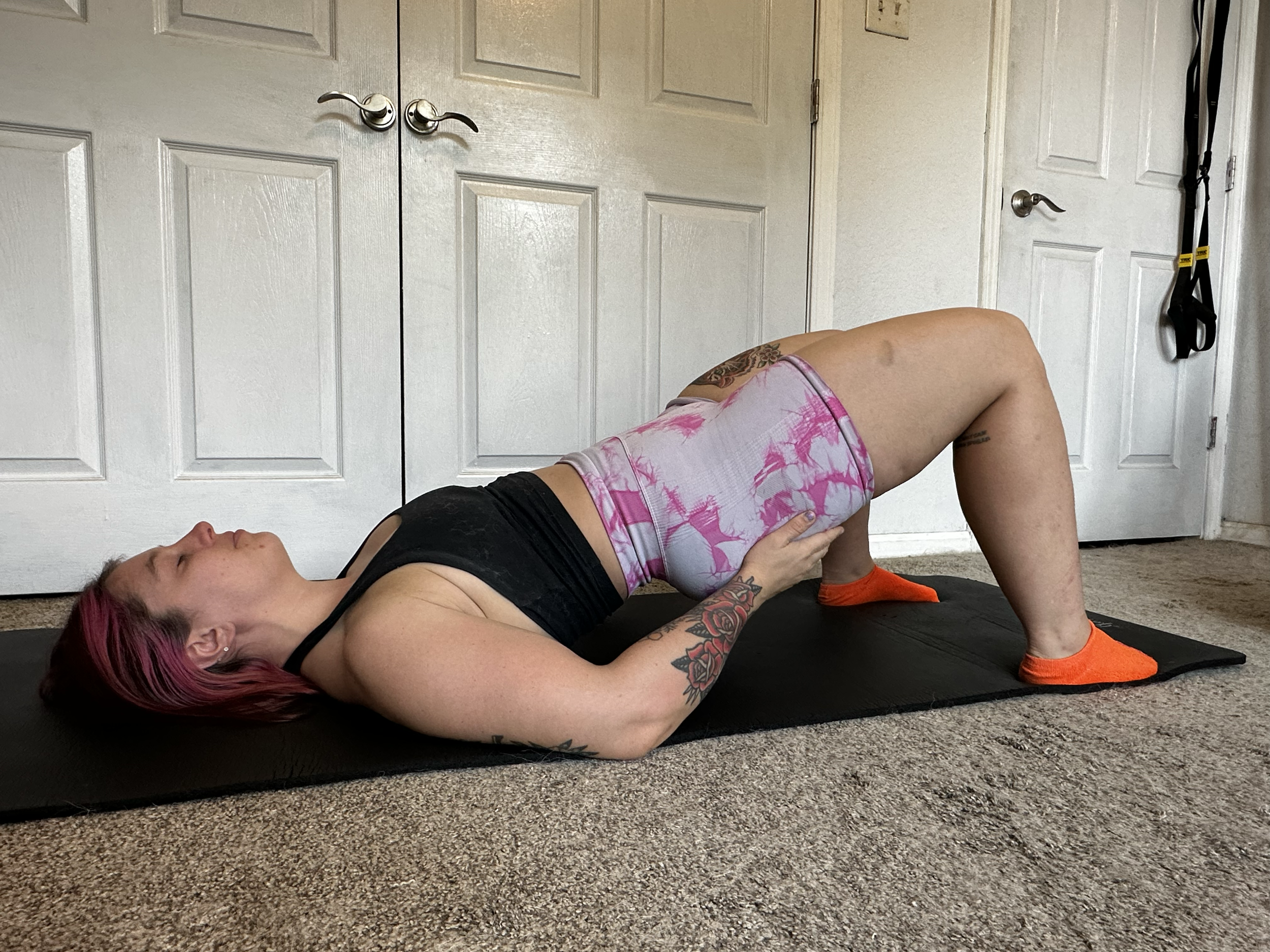
Holding my hips/glutes for better glute activation.
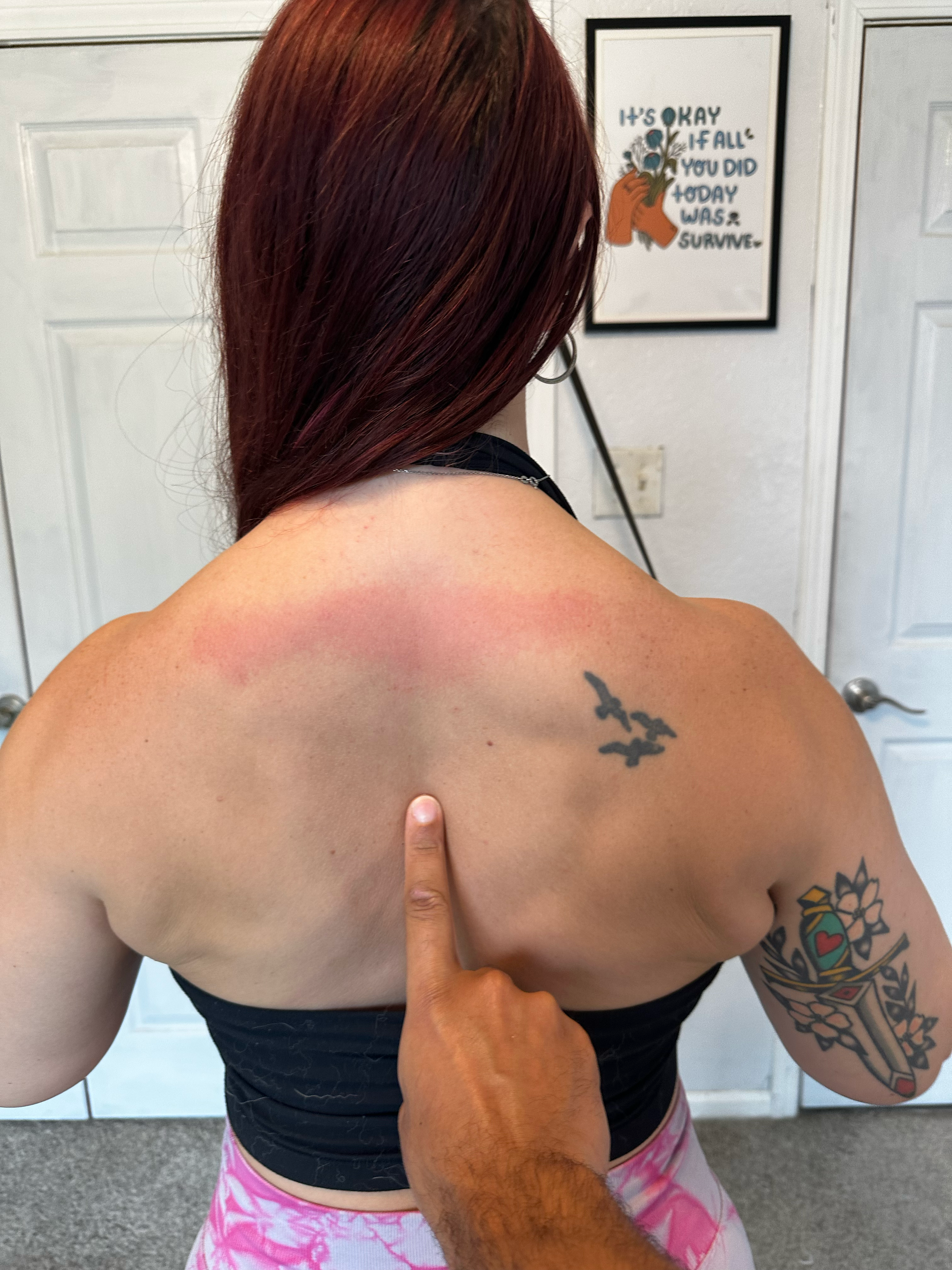
Bryan touching between my shoulder blades for better scapular squeezing.
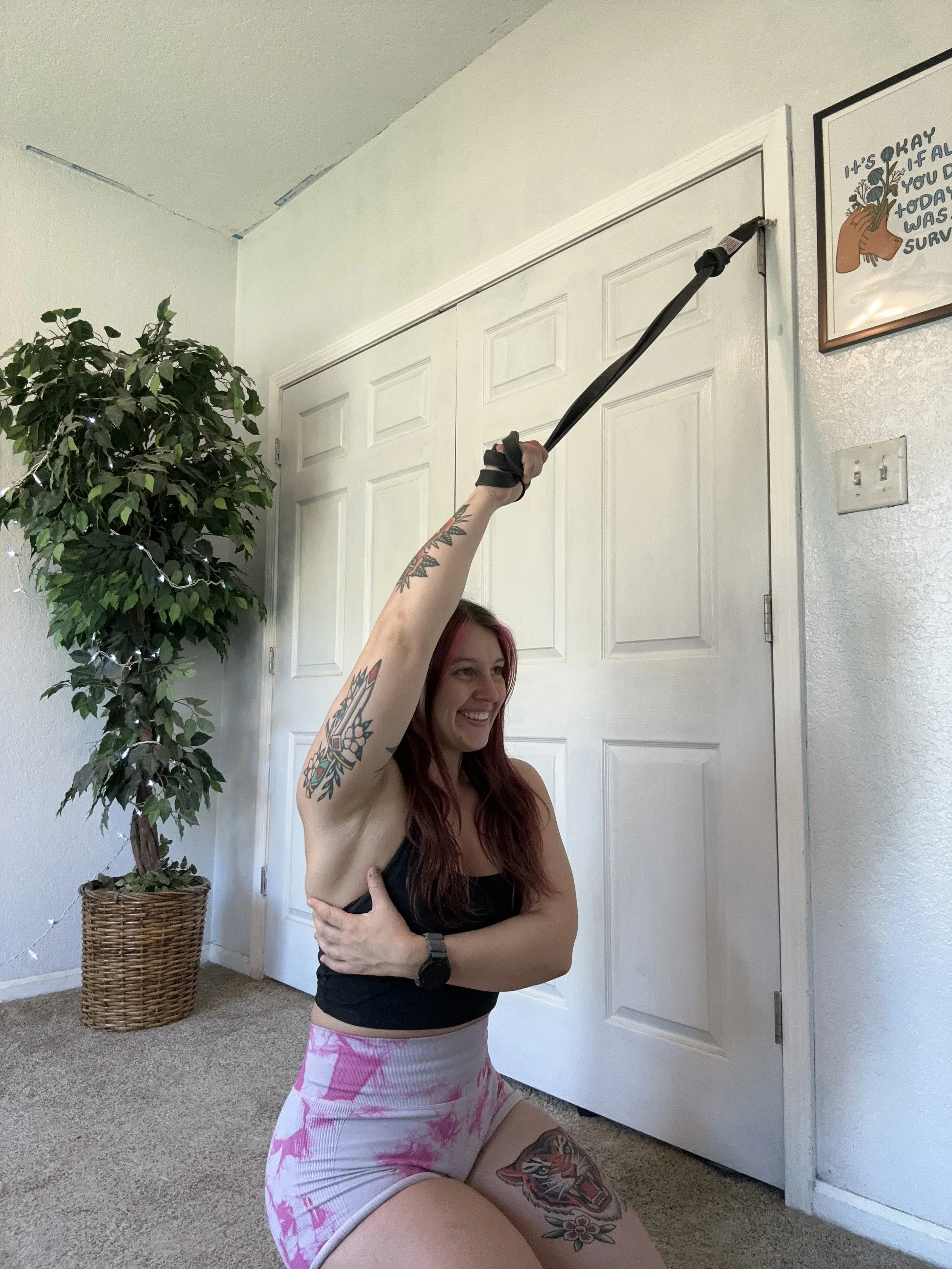
Holding under my armpit for better activation into my lats.
See how it works:
Sit down.
Contract both quads for 3-5 seconds.
Now place a hand on your left quad, but squeeze both legs. 3-5 seconds.
And switch: a hand on your right quad, but squeeze both legs. 3-5 seconds.
Were you able to notice a difference in how using your hand allows you to bring deeper attention to that area?
Activation Exercises
Activation exercises are usually included during warm-ups as a way to target the areas that you struggle to connect with, or that are weaker in general. This works by bringing blood flow, through light resistance to that area.
Examples:
Banded side steps for glute med activation
Banded pull-aparts for posterior shoulder & back activation
Banded rows for shoulder blade activation
Deadbugs for deep core activation
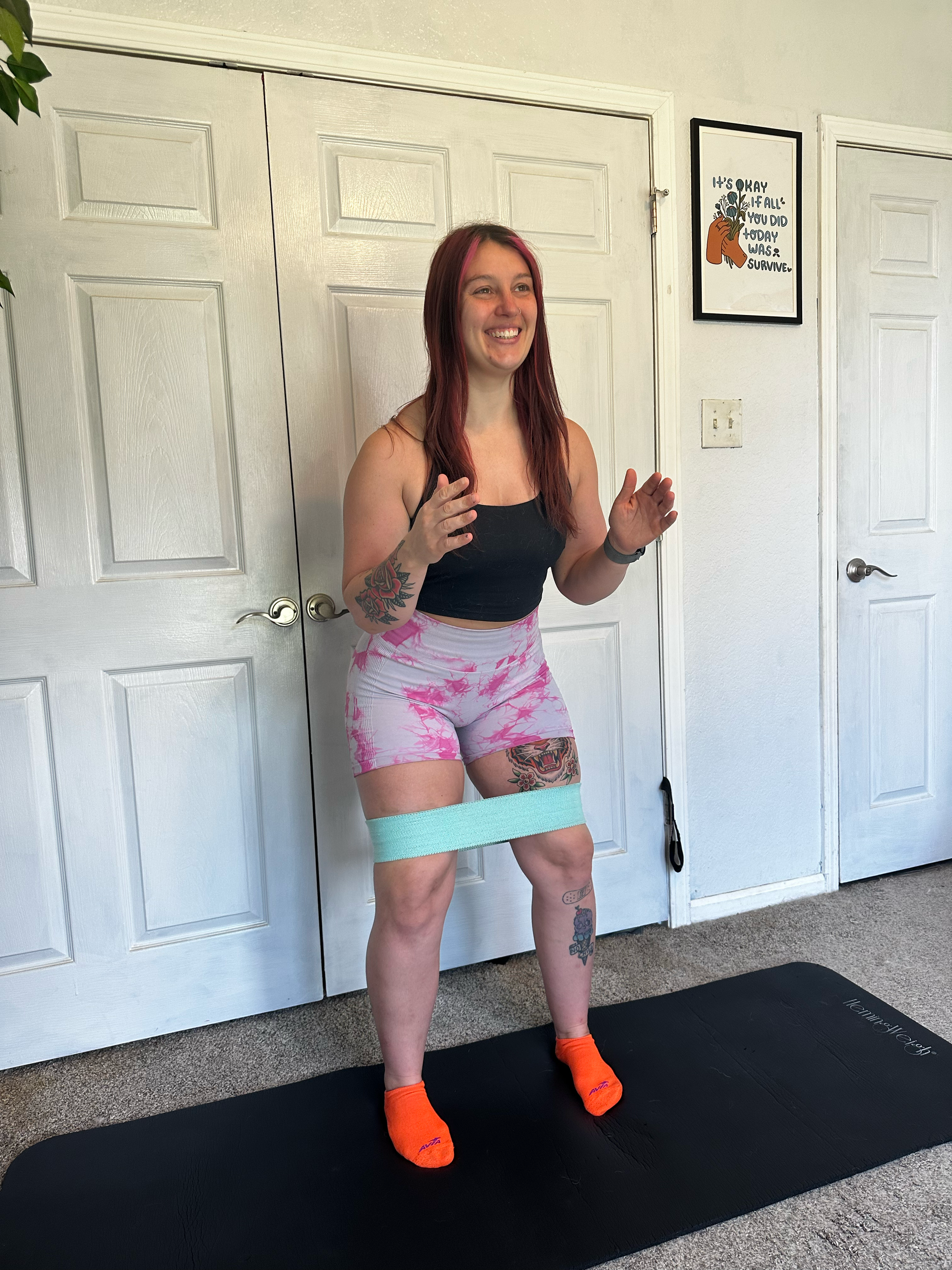
Banded side steps for glute med
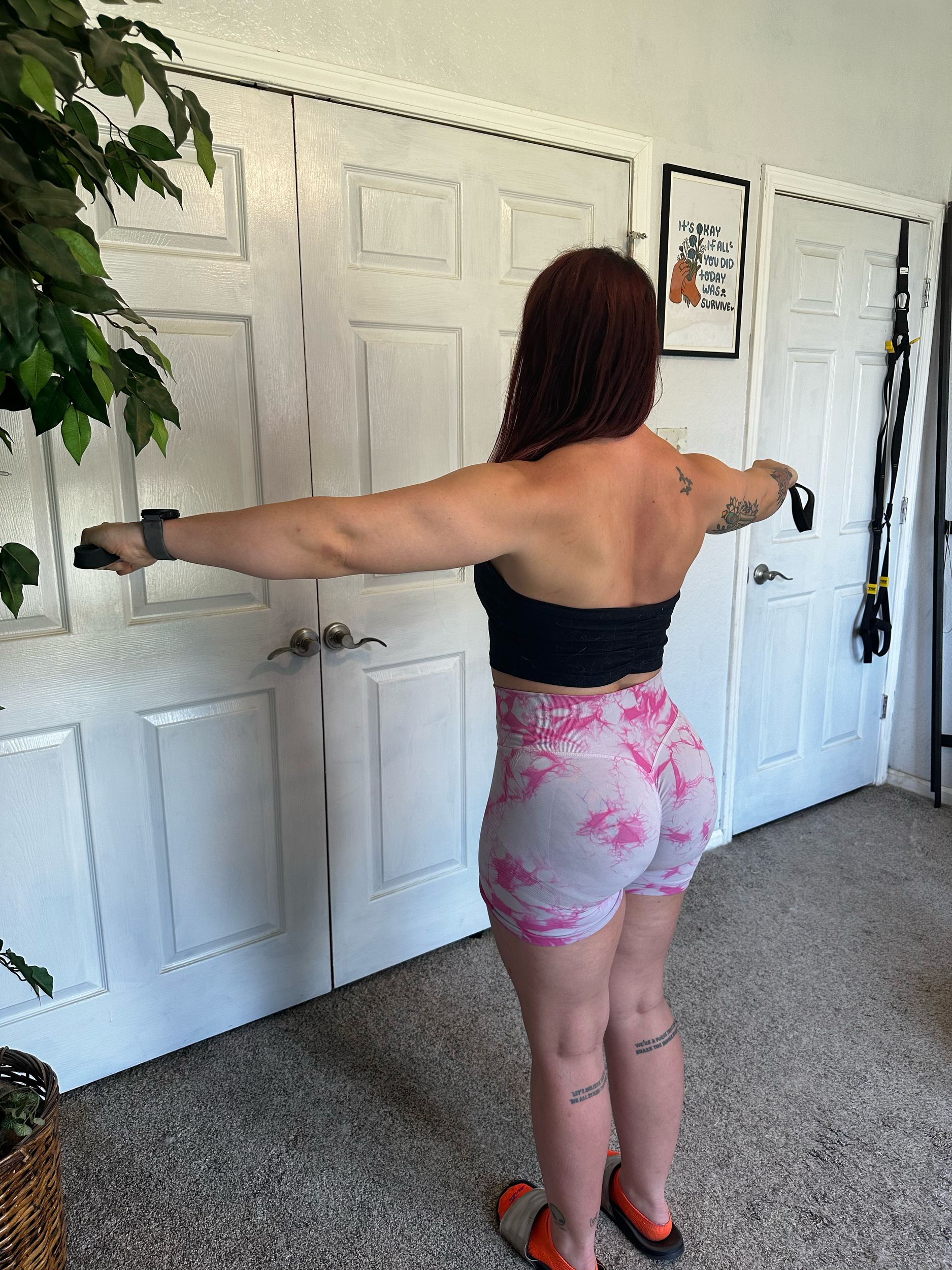
Banded pull-aparts for back of shoulders
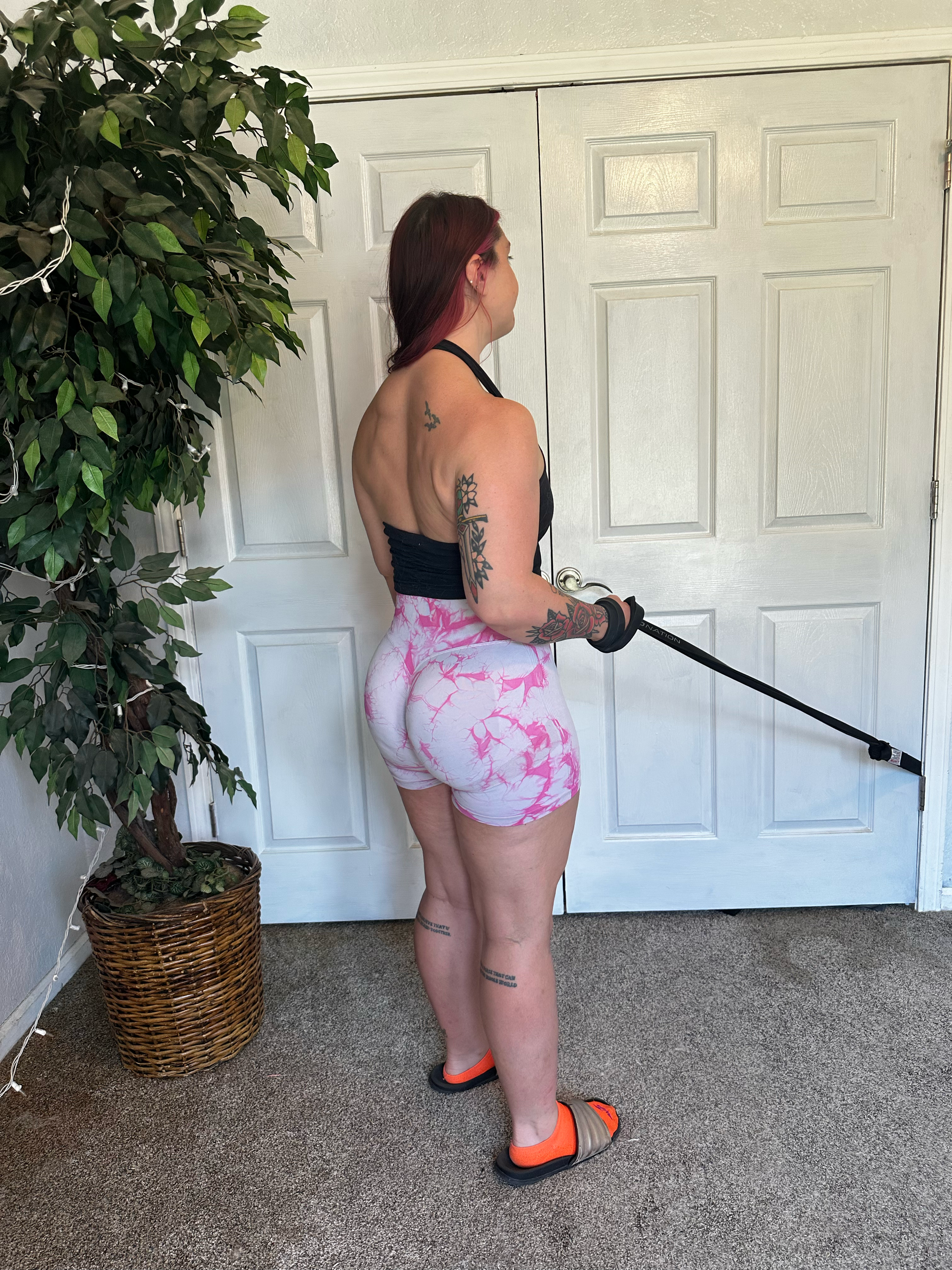
Banded rows for shoulder blades
Outside of warm-ups, you can also do these exercises on their own. For example, after a long day of sitting, some side steps or pull-aparts are helpful for working the areas that are neglected during your day.
Isometric Exercises
Another technique you can use is to practice isometric holds or squeezes. This increases your ability to connect with that area by removing outside chatter from nearby muscles. Instead of practicing reps, you’re going to eliminate the movement during the reps, which oftentimes gets the overactive muscles speaking up and taking over more naturally.
With this technique, you’re going to get into an exercise that you struggle to connect with. Instead of doing your normal reps, you’re going to hold and actively squeeze into that muscle the entire time.
For example, if you’re struggling with glute activation, you can get into the top of a glute bridge with your hips in the air. From here, you’ll squeeze into your glutes and make sure you’re maintaining good form the entire time. You may feel certain areas trying to fight you and take over, but continue your breathing techniques and don’t let your mind wander.
Some other examples of these types of exercises:
Isometric lat pull down (for lats)
Wall sits (for quads)
Pin press (for chest)
Isometric pull-apart (for shoulders / back)
Isometric hamstring curl on machine (for hams)
When using this technique as a beginner, you can work with just bodyweight or veryyy light weight. More advanced lifters can work with RPE 4-7 or 40-70% of your 1RM when applying this. Start with 15-30 second holds and work your way up to 60 seconds.
After progressing with time, continue to progress these exercises with load the way you do with your standard exercises. It might not be every week, but do challenge yourself if your form is good.
Reminder
If you struggle to connect with any of these techniques, you will get better connected over time. Continue to practice breathing and presence as you do so. This can be the hardest part for most people. But also….
Corrective Exercises
If you’ve got muscle imbalances or struggle with posture, you are going to feel less connected with your body, naturally. Adding these types of exercises into your routine will help to relax stiff muscles, lengthen short muscles, strengthen weak muscles, and then teach the joint how to move again with normal function.
If you struggle with imbalances or posture, you will benefit by doing these types of exercises and, in return, you’ll connect better via MMC because your body won’t feel like its constantly fighting itself anymore.
For example, let’s say you’re struggling with anterior pelvic tilt.
You want to:
Relax the tight muscles (ie: iliopsoas, rec fem, TFL, QL, adductors)
Stretch the short muscles (ie: iliopsoas, rec fem, TFL, QL, adductors)
Strengthen the weak muscles (ie: glute med, min, max, anterior core)
Then practice the technique with more complex movement (ie: squat, deadlift, step-up)
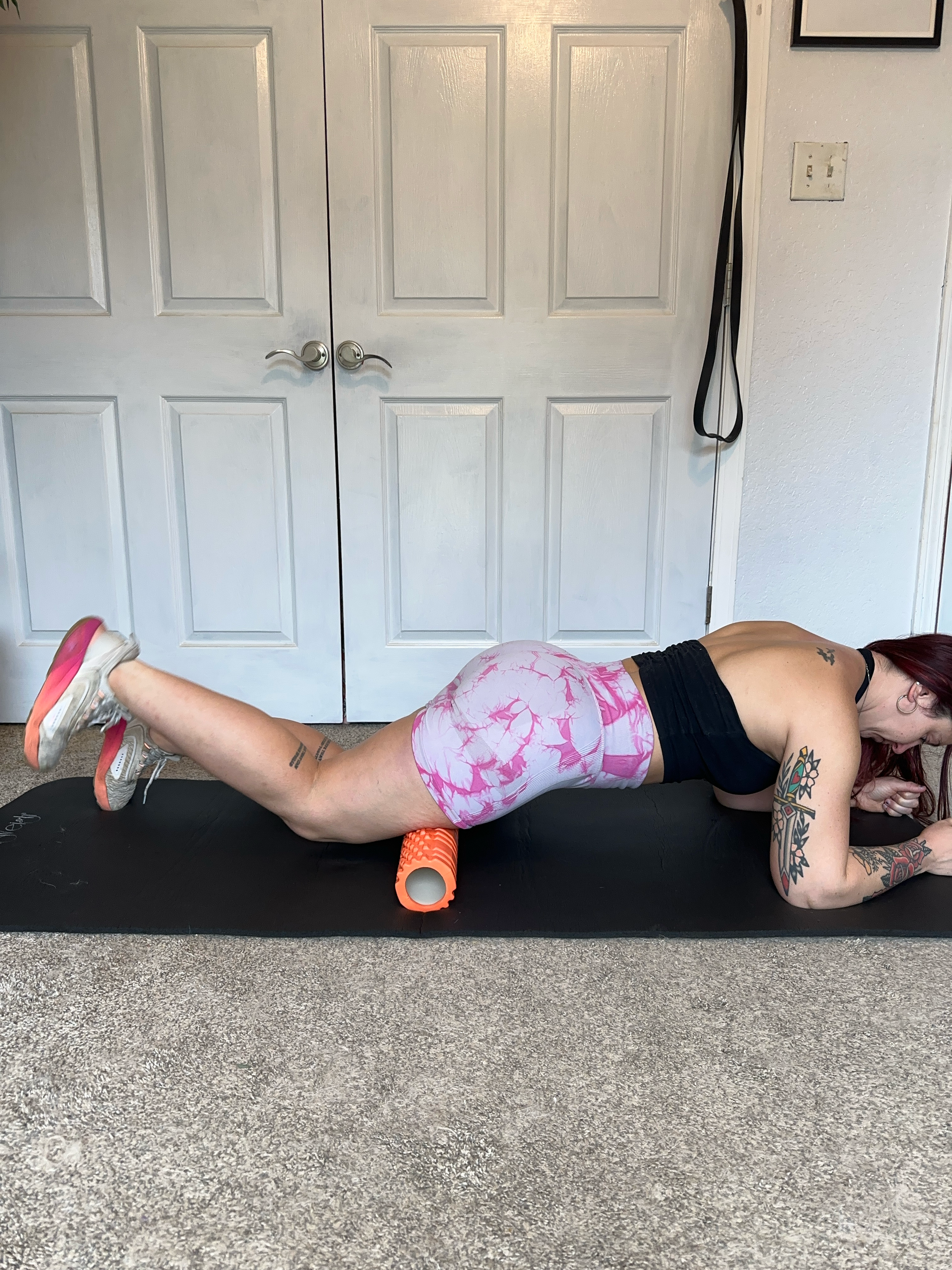
Step 1: Foam rolling the quads/rec fem
Foam roll to relax the tight and overactive muscles.
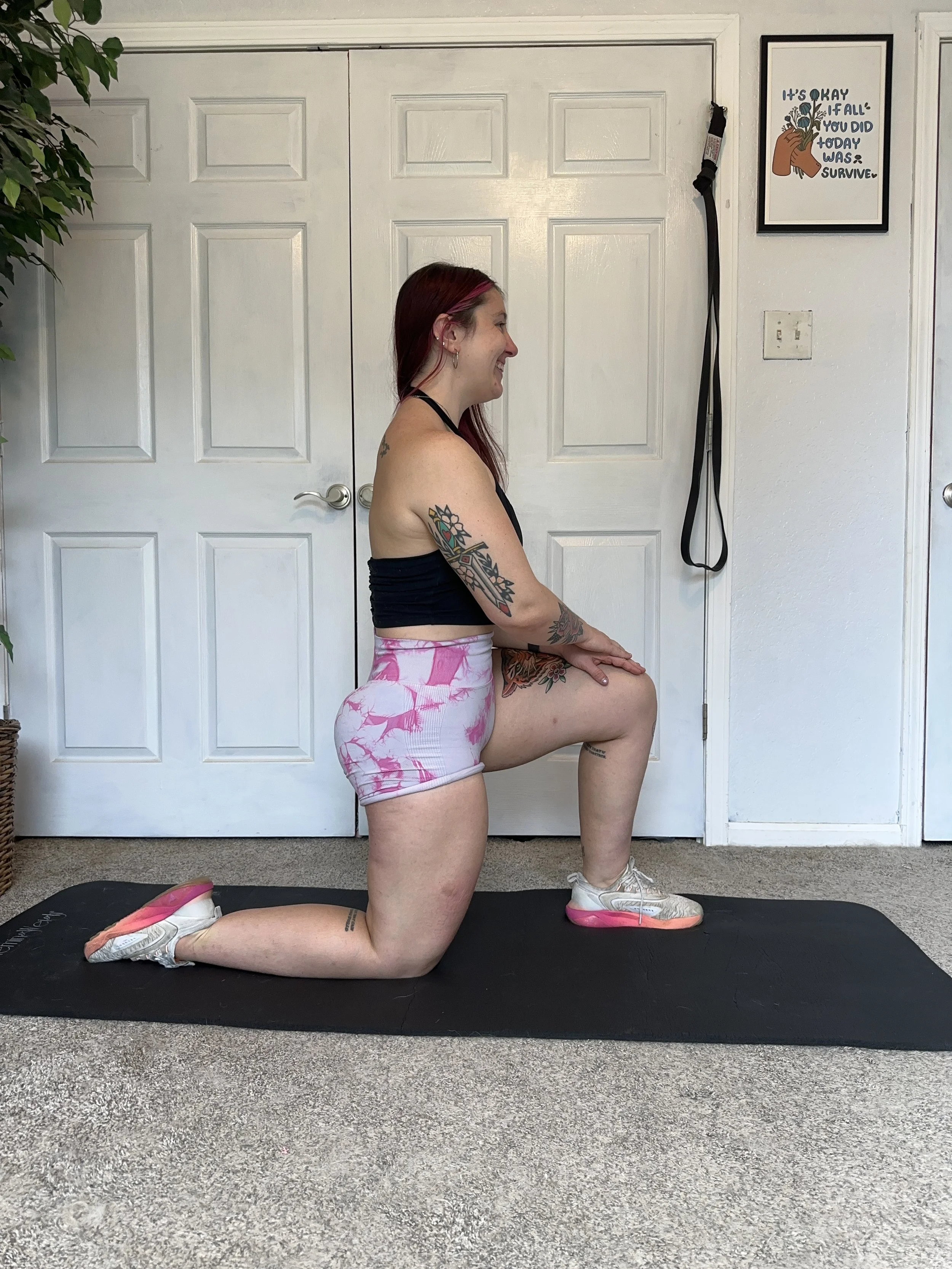
Step 2: Stretching the hip flexors
Stretch that area now that its relaxed to help it create change in the length of the muscle.
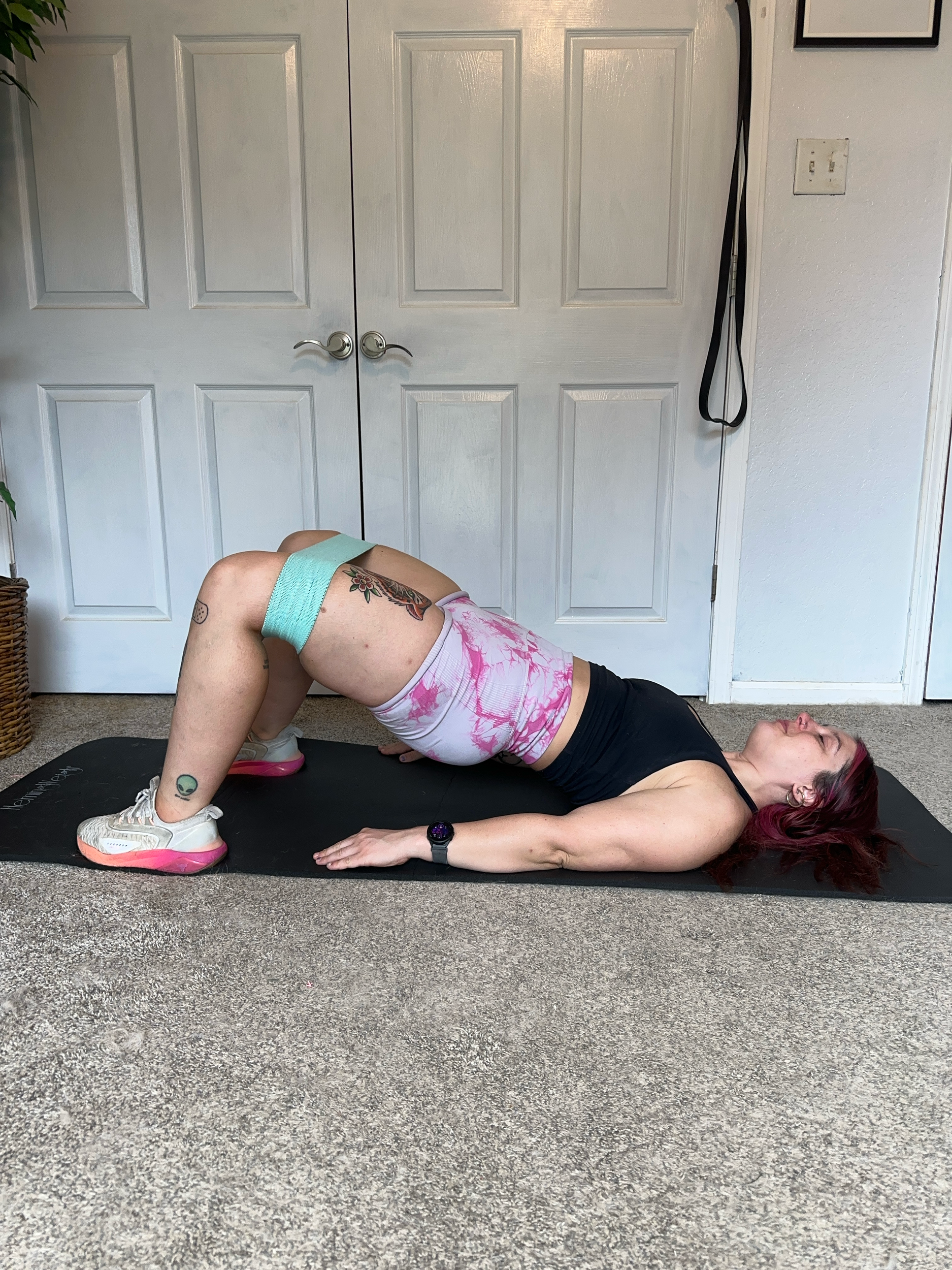
Step 3: Strengthening the glutes
Strengthen the weak muscles around that joint, otherwise no permanent change will occur. This is crucial.
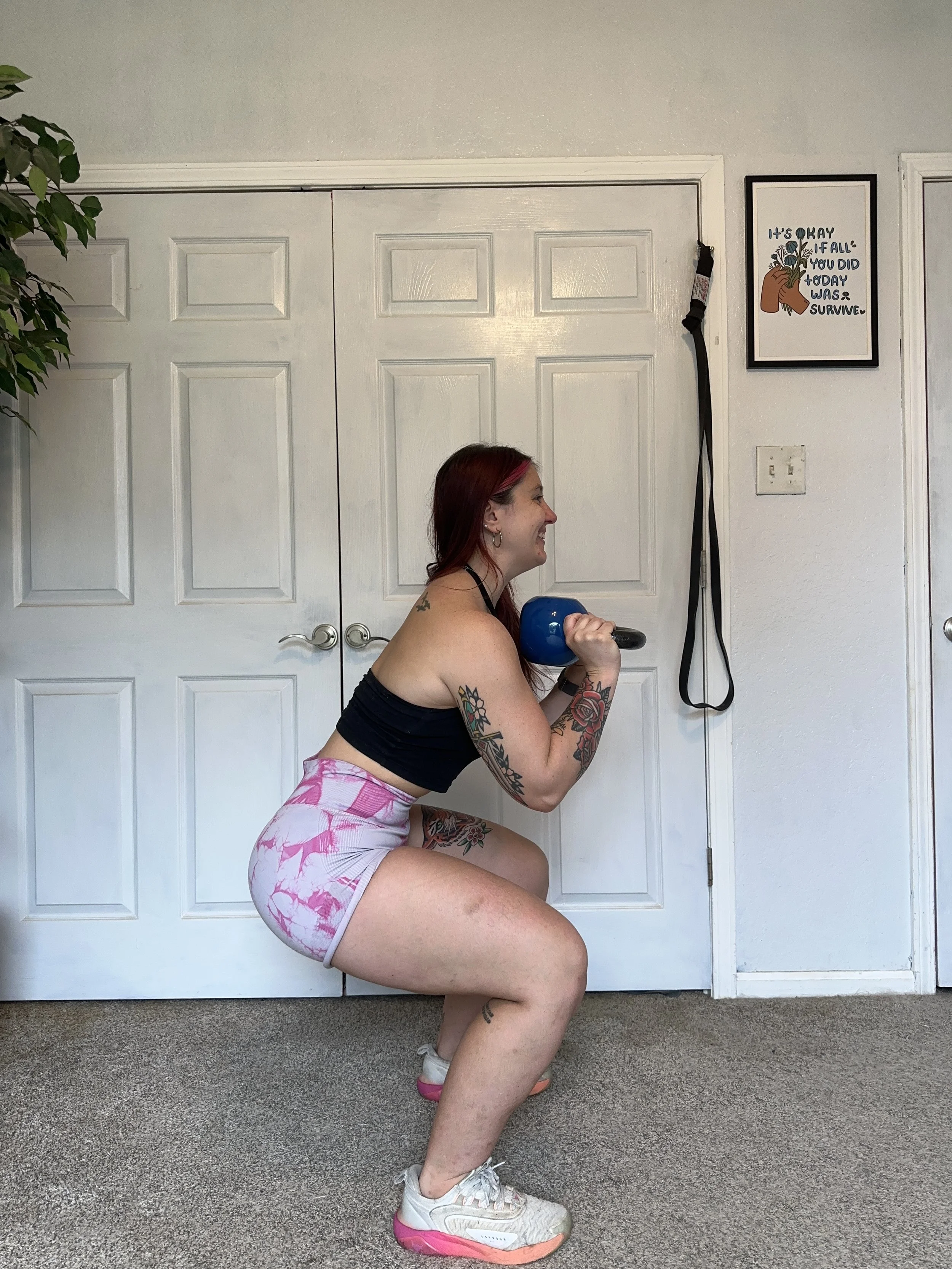
Step 4: Practicing pelvic control with goblet squats
Then you can practice the technique (in this case, pelvic control) with more advanced movement to work through maintaining posture through different positions.
This is an example of a routine that can help to work on those postural corrections at the same time! You’ll often do these types of exercises while in physical therapy, on your own after graduating PT, or with your trainers to reduce risk of future or further injury.
My Experience
I struggled with connecting with my body farrrr after my beginner years in the gym. Even after 8+ years of lifting, it still felt like I was unlocking new levels to my body because of muscle imbalances, poor posture, past injuries, etc.
I think nowadays there’s this big “mind-muscle connection” over everything, and while it does matter; its not the end of the world if you struggle to connect with your body while people around you don’t seem to. It doesn’t mean you can’t safely make progress. You can. So don’t get frustrated; just know I was in this position too and many others are too.
Don’t worry about how long it takes you, as long as you continue seeing improvements. Continue to practice and you’ll notice differences over the weeks, months, and years.
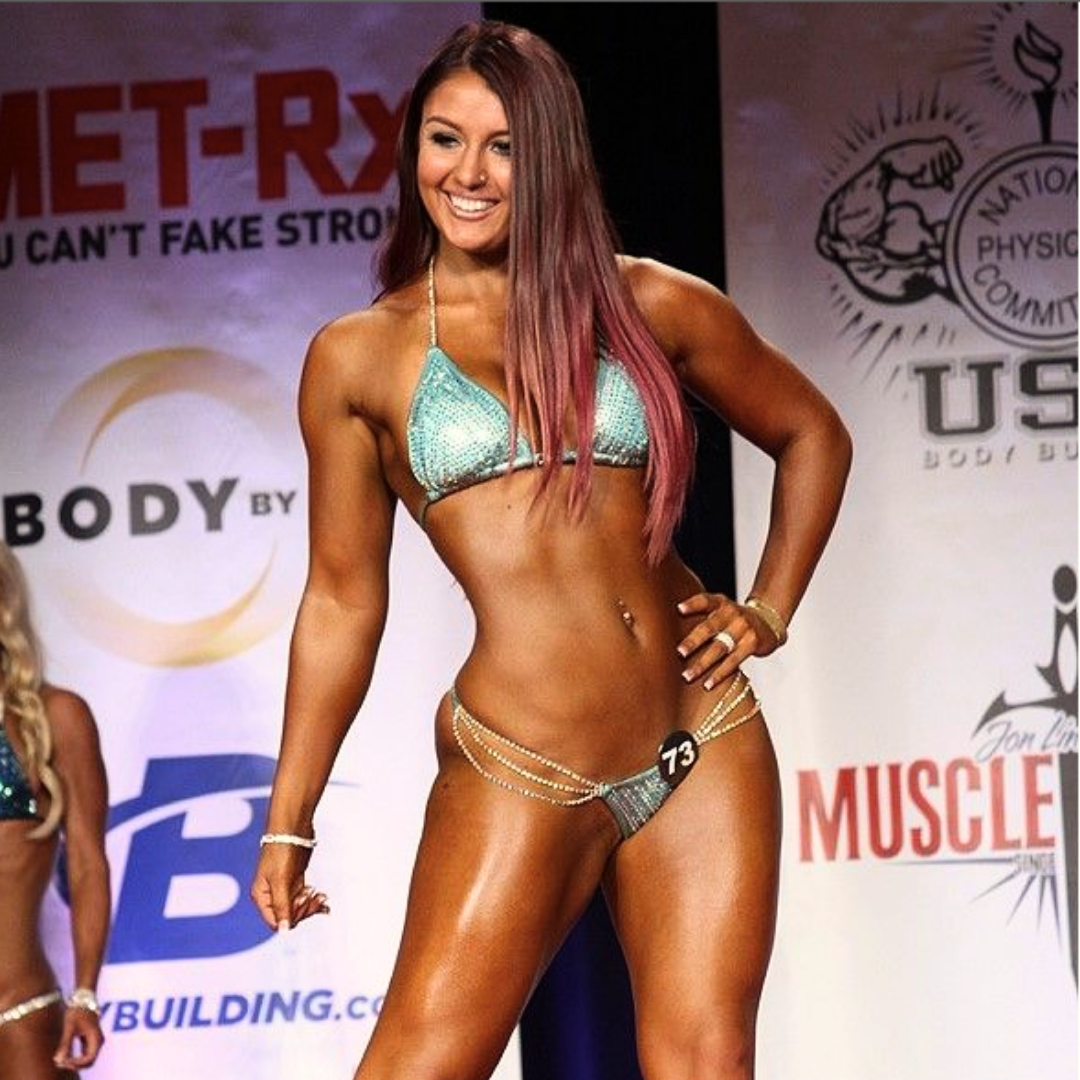
When I started bodybuilding, it was only my first few years into lifting. My MMC was horrible at this point! I definitely couldn’t feel my glutes, shoulders, or lats very well here.
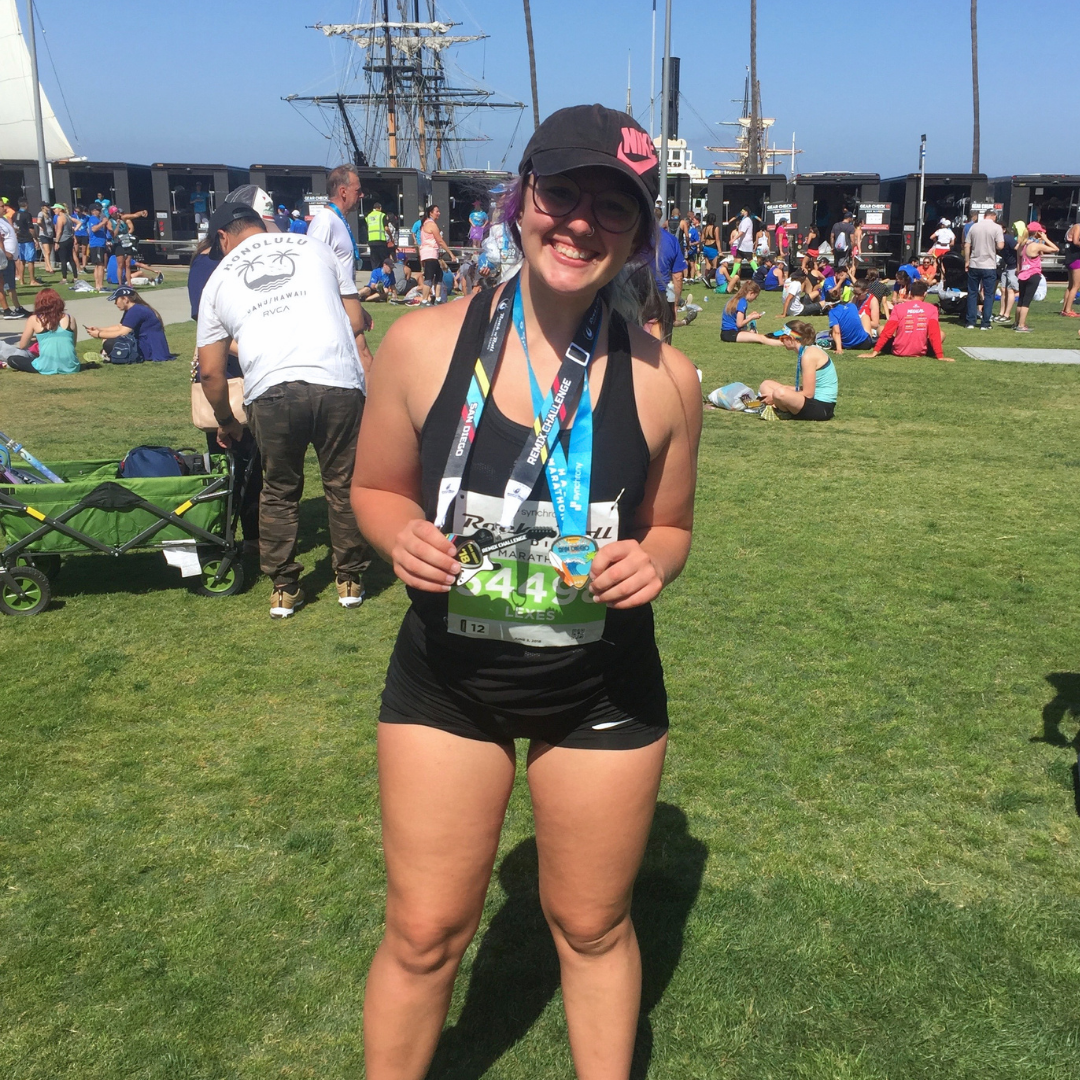
Learning how to connect with your body also helps when you run. Feeling the placement of your body when you land and how hard to push is part of MMC and can improve performance more safely.
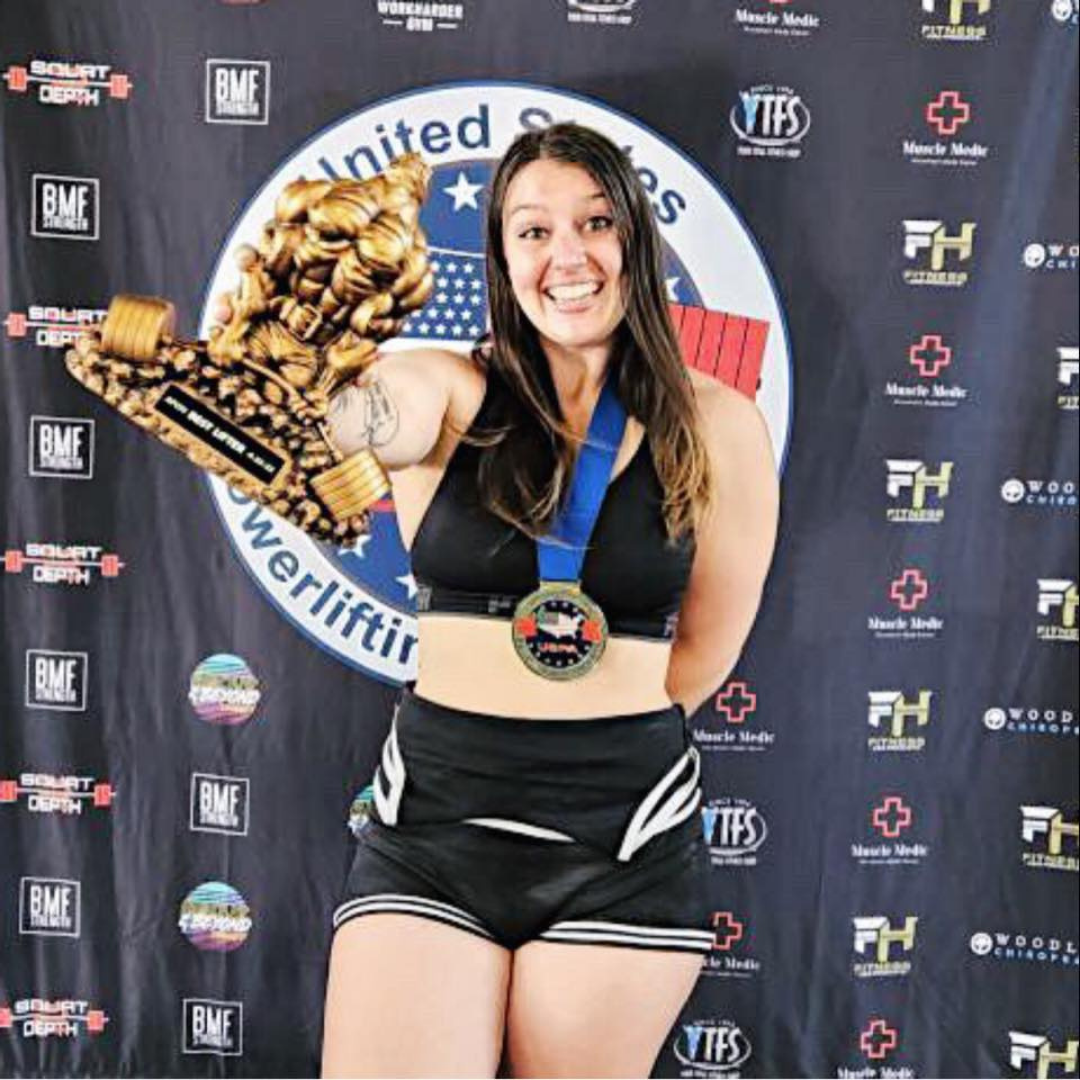
You won’t feel the MMC the same as you begin lifting heavy, or powerlifting (in comparison to something like bodybuilding), but the skills from this connection will allow you to lift more, more safely!
When Does Mind-Muscle Connection Matter?
Your ability to connect deeply is going to shift as the intensity (or load) increases. But you also do not want to increase the load until you’ve practiced and nailed the technique.
With lower intensity exercises like mobility drills, corrective exercise, and hypertrophy work; you’ll more easily connect because you’re focusing on isolated areas of your body with lighter weights. When you start to train closer to strength and maximal strength (like powerlifting), the way in which you connect can start to shift.
For example, a heavy squat won’t feel the same as an isolated bicep curl. You’re going to generally be less connected to one particular area of your body, and more focused on full body tension the more advanced that you get, and the harder you push.
That said, having that MMC allows you to hold form and prevent injury.
Final Notes
It can takes years to build up mind-muscle connection. Remember that this is common and you’re not alone in that. It can be super frustrating, but don’t let it be a big deal. Its all practice, and even if you don’t feel super connected right away, the more you practice, the better you will get.
Once you begin to practice these techniques consistently, you should start to feel like you’re unlocking new layers or levels of connection with your body! If you’re not able to see improvements with how you connect with your body, you can work with one of our coaches for more direct guidance around building MMC — or if you also struggle with frequent pain or injuries, get seen by a physical therapist for proper assessments & injury recovery plan.